Showing posts with label world building. Show all posts

Thursday, January 9, 2014

Guest Post: How to Build a World in More Than Seven Days by RS McCoy

When writing science fiction or fantasy, creating a new and original world can be the key to setting your story apart. While characters should be well developed, plot should have a clear arc, and other elements such as tension, imagery, and pace should all be carefully considered; fantasy authors often have the added task of building a believable and manageable world from scratch. Today’s article will reflect on some of the key elements of world building.


Tuesday, July 9, 2013

*NEW* The Bearded Scribe now offers Author Services!

Hello Everyone!

I am SUPER excited to make this announcement—it's been several months worth of consideration and planning, but I've decided to launch an Author Services section to The Bearded Scribe.

What are Author Services you may ask?  Author Services are comprised of a plethora of individual parts, but the sole purpose is to improve your story and, ultimately, your success as a writer.  Whether you've finished your manuscript and you're looking for edits before submitting to an agent or self-publishing, you're just starting out and are now looking for guidance or motivation, or you've conceived a great idea for a story but do not know where to begin to berth its genius onto figurative paper—I am here to help!

Below you'll find an explanation of Author Services offered (at the moment); click on any of the individual services to be directed to the Author Services page for rates...

Monday, March 25, 2013

World Building: Making Tough Choices

Hello Beardies, 

You’re familiar with the iceberg analogy: only a small fraction of the whole is visible on the surface. It applies to people, art, sports, nature, and it applies to world building. You, dear writer, should have, floating about in your brain, a berg-size mass of knowledge about the world in which your story takes place. This knowledge informs your writing and adds layers of richness to the story. Even so, only a small portion of that iceberg will surface in the story. And that means you have to make choices.

Which details about your world will get page time and which will you leave out?

 It’s a dilemma, for sure. And when life gives you dilemmas, make dilemmanade. (All together now: GROAN!)  The pun may be bad, but the point is valid. If you use this challenge to think carefully about the choices you’re making as a writer, your story will grow stronger. Here are some ideas for doing just that:

Monday, October 22, 2012

The Quiddity of Speculation: Dystopia 101

G’Day to you, Beardies, and welcome back!

Any day that I get to write a post for The Bearded Scribe is a good day, and today is no exception. Today, we’re unveiling the first post in a new series we’re calling The Quiddity of Speculation. “Quiddity” is a word to which Joshua introduced me while we were throwing around titles for this series. According to Merriam-Webster, quiddity means “whatever makes something the type that it is.” The quiddity of a thing, then, is its very essence. In this series, we’ll dissect different types of speculative fiction in detail, exploring the definition and distinguishing characteristics of each. I’ve literally been researching this post since I joined the team here. It’s been a long time coming, so without further ado, let’s get to it!

Monday, July 9, 2012

World Building Series: Settings -- Part I (Introduction)

Afternoon Beardies!


When I started my blog back in February, I knew right away that I wanted to include a World Building Series to help other writers.  The series is designed as a reference point, to seek help if you have questions, and sort of a guide of "tips" and "techniques" in various areas of the World Building process.
(Of course, I am always open to direct questions from my followers; if you have a question you can always leave it in the comment section of this or any other post.)

I've been putting this area of World Building off for obvious reasons.  It's massive, and it is going to take several posts to cover such an extensive topic.  Other than on my languages, I've spent the most amount of time on this area when the original story idea for The Chronicles of Aesiranyn kept--for the lack of a better word--haunting me.

Lets start with the starting point you should start with as a writer... Maps.

An Aerial View of Elizabeth's Dream Circulatory Desk :)
Even if you are writing an urban fantasy story set in a major city on Earth, your world should have a map.  Of course, if that is the case, your map is already available, and you merely have to pull up Google Maps.  By saving those maps (screen shots) as a quick reference guide, you will save yourself many headaches of wondering what is located on the cross-streets of say... 42nd and 5th in New York City, wherein lies a bibliophile's own fantasy.

For the purposes of this introduction, however, let's assume you are building your own world.

Maps in Fantasy Books:
Having a map is crucial to World Building because it helps you, the writer, view your world so that you may keep facts and settings consistent.  It also provides you with a somewhat haphazard but helpful scale of your world so that you may know the distance between two places (how long does it take to travel from Point A to Point B).  However, if you decide to include a map in your final product, having a realistic and thought-out map--with a humble regard to how geology forms things such as coastlines, mountains, rivers, et cetera--will greatly benefit you.  There have been a few occasions in which I have opened a book and found a map that didn't seem realistic or thoroughly researched, and so, without even a look at the text, I closed the book and placed it back on the shelf.  On that note, however, there have been a couple of books in which I have ONLY glanced at the included map and decided to buy it.

Let's touch on a few of those geological formations for this blog post.

Coastlines:
Coastlines are irregular.  If your coastline looks like a circular or rectangular blob, your doing it wrong. Coastlines are created by the shifting of tectonic plates--plates pulling away from one another resulting in oceanic trenches, which are never clean lines.  Nothing in nature is ever a clean line.  Coastlines are then continually changed by the constant erosion of landmass by the waves, which is completely dependent upon the geological make-up along the coast.  (Softer materials erode quicker, leaving the harder, more resolute material behind).  On the other hand, if your fantasy world is made up of man-made landmasses, then by all means, draw in straight, clean lines.

An excellent place to look at how coastlines appear is an atlas.  Or, in this day's technology, Google Maps.  You can take any island, any coastline of any continent (or, for that matter, just a section of it), or any ocean (or sea, gulf, or bay) as inspiration.  Or, if that doesn't inspire you, maybe its inverse will be appealing to your creative spirit.

Another great place of inspiration for the coastlines of your world can be found in nature--or even those elementally frustrating situations around the house.  Have a water stain on a wall or ceiling? Trace its outline as a start and then embellish.

Mountains:
Like coastlines, mountains are also caused by the shifting of tectonic plates--but their convergence and deformation.  Orogenesis--or the creation of mountains--happens along the lines of tectonic plates, which is the reason for extensive mountain ranges as opposed to singular peaks.  Sometimes the subduction of one plate under the other occurs, but more often the convergence of the tectonic plates pushes both plates upward, causing crumpling on either side.

There are always exceptions to the rule, but taller, rigidly-peaked mountains are usually the youngest, while smooth, rolling peaks signify an older range.  Take the Appalachian Mountains, for example; they are the oldest on Earth--and are one of the most visually appealing mountains because of their gently rolling peaks and valleys.

Take heed when drawing your own mountains.  Get to know your land.  What did it look like in its most primitive stages?  Or is it still in said stage?  Have its plates shifted and moved away from one another creating a drastically different landscape?  Mountains should occur along where the plates collide.

Rivers:
Rivers flow down from higher elevations toward lower elevations.  So, in simple terms, from mountains toward coastlines.  They take the most direct route, so long as there is nothing impeding that route.  In other words, rivers will not often change directions, unless there is, say, another mountain range blocking its route to the coast. I am in no way saying they travel in a clean, straight line (remember that nothing in nature is ever a clean line), just that they their routes are downhill.

Rivers converge; smaller tributaries flow into larger rivers.  Rivers do not split, unless there are sound geological reasons for its divergence, and in this instance, the divergence happens for short distances, eventually re-converging.

If a river flows into another body of water, such as a lake, it will continue.  A lake will empty at the lowest side of the lake, wherever that may be, so pay attention to the altitude in the different areas of your world.

A Word of Advice:
I am sure you all have heard the saying "If you want to be a great writer, then read, read, read," but the same is true for world building.  If you want to create great maps for your world, pick up an atlas.  Look at the intricacies of the coastlines of several different bodies of land.  Study the layouts, paying close attention to the three areas mentioned above.


Another great place to visit for help and questions related to World Building, specifically map creation is The Cartographers Guild, a forum on which you read and even participate in related threads.  


Get Busy Building & Happy Scribing, 


Thursday, June 7, 2012

World Building Series: Characters -- Part II

Hello Beardies!

It has been quite some time since I have posted within the World Building Series, and for this I apologize. I am not sure how many of you actually follow the WBS, but it will be a constant and regular feature on the blog--at least until I run out of topics within the series to discuss.

This post will also link to my post titled Native Americans: Mythical Creatures? in the sense that it is about using an existing idea or representation of something already in existence (in the case of the aforementioned post, it referred to an actual peoples, the Native Americans) as inspiration for a unique creation within your own writings.

This post, however, does not refer to living peoples as inspiration; it instead refers to the worn-out, stereotypic, and now clichéd examples of Races within the Fantasy genre--especially Epic Fantasy, but now even wandering amuck in Urban Fantasy, too.

Too many times I have picked up a new release at the bookstore and, without having to even crack the binding, I can tell you exactly what the characters look like.  When Tolkien--the indisputable Father of Fantasy--released his works, the races within the pages became the model of all fantasy novels to follow.  Unfortunately.  Not that Tolkien's creations aren't worthy of mimicking, because they are, but definitely unfortunate due to the fact that his creations became stagnant when they appeared within the countless works of others.  And most of the time, by default, so did the plots.


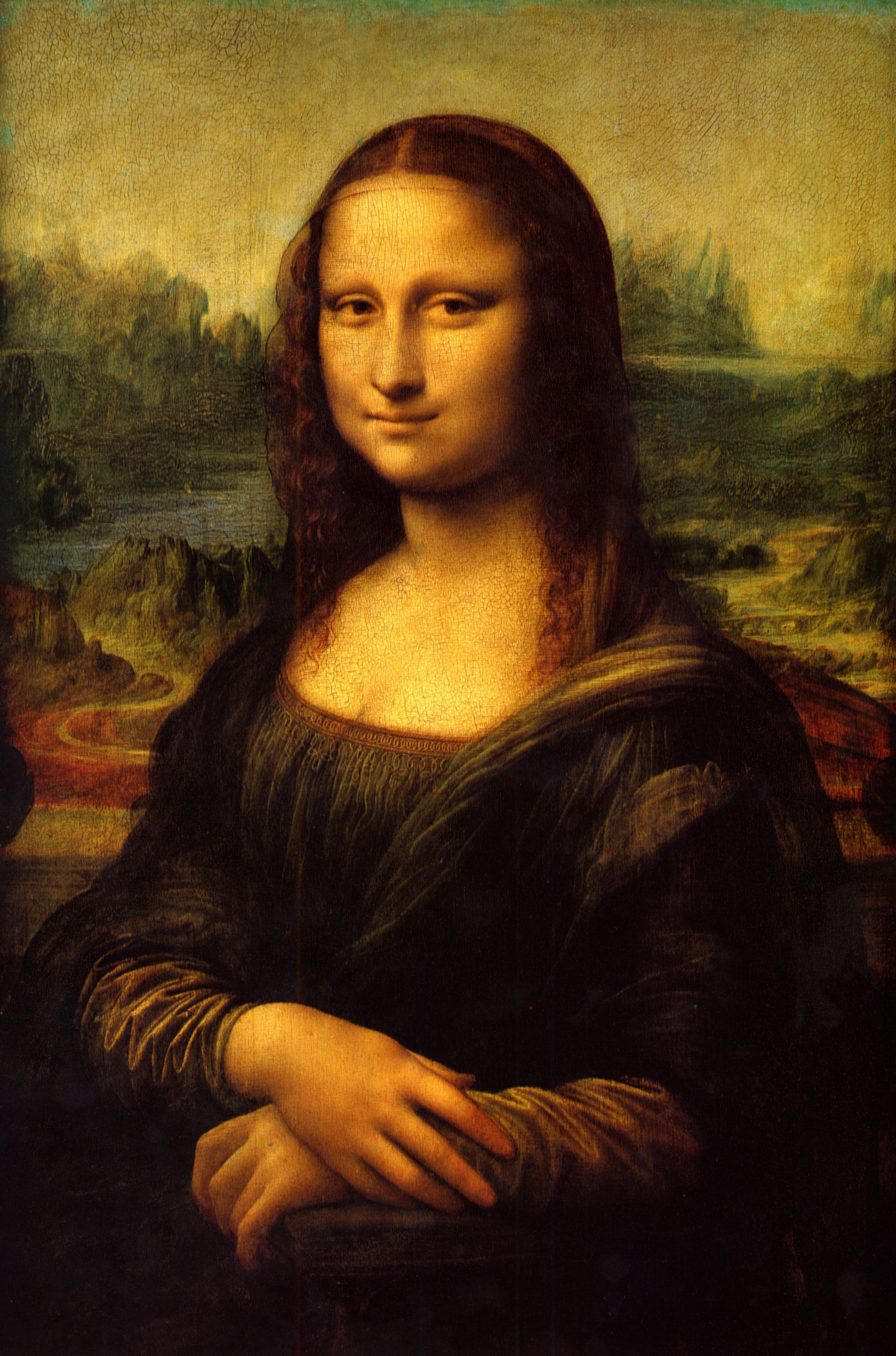
How boring would going to the museum be if all the paintings were of Mona Lisa--but the engraved plaque under each of the frames bore the name of a different artist?  Or every time you attended the Symphony the Orchestra played the same piece--but the program cover announced a different title and composer despite the fact?

See my point?

In the case of the latter example, many composers used the works of others as inspiration for their own pieces--and, in listening, you can definitely hear it--but they did not copy the piece note for note.  They borrowed themes.

Do the same for your characters.  Not all fantasy stories have to contain elves, dwarves, fairies, dragons, centaurs--dare I mention vampires and werewolves?--but it is okay to model your own races upon these and create fresh and unique--but still fantastical--creatures.  I know I have, and that was most of the joy I had while writing.


There are plenty of sources of inspiration for original creatures and characters:  mythology, folklore, religion, and even, for example, some of the bizarre but beautiful creatures that inhabit our marvelous planet such as the leafy seadragon (pictured above).


Two of my most treasured sources for creature inspiration--other than the chaos swirling in my head--can be found on my bookshelf.  Both books cover all of the sources above; one is a field-guide, while the other is a glance into the symbology behind the creatures.


You can purchase either one by clicking on the images, or by visiting your local Barnes & Noble.


I plan on continuing this specific topic in future posts, expounding upon how to develop your creatures by borrowing elements from the above-mentioned, and other, sources.


Stay Tuned & Happy Scribing,


Tuesday, June 5, 2012

World Building, Word Count, and Other Daily Beasts

Hello Beardies :)

A couple nights ago, Elizabeth and I were having one of our infamous, late-night textathons (I am sure she regrets me discovering that she possessed an iPhone, which meant she and I could text for free via iMessage on my iPod).  During our ribbons of various topics of discussion, Elizabeth posed the following question, accompanied by the resulting comments:

Elizabeth: Why do Fantasy writers work in trilogies and series?  Standalone fantasy is a rare duck.  And sometimes I'll even wait until I know a series is complete before reading it.

Having spent about a decade (at least) crafting and perfecting the world in which my own story takes place, I immediately replied:

Joshua: I think it's because fantasy worlds take so much effort for the writer to "build" that they (I can attest) don't often want to abandon that world after just one book. 
Elizabeth: That's my feeling too.  I actually have nothing against trilogies as planned trilogies; it's when I can tell that the only reason for another story is that a series has become a cash cow that I have issues.

This conversation came after a previous discussion of the manuscript for The Son of Drynntorm, for which I have had issues finding an agent mainly due to, I think, its hefty word count.  Elizabeth--many thanks and many debts owed to her--agreed to give the manuscript a read-through a little over a month or so ago, and in doing so, has provided me with some suggestions and insight.  She also called me out (kindly and respectfully, of course) on one particular thing: missing pieces of the puzzle.

The only response I offered was that I edited for word count, taking out scenes that would not be missed as part of the whole story.  They didn't, however, go unnoticed by Elizabeth.  In reading, she could tell where I had edited and thinned for word count.  She admitted to wanting to see the manuscript before the cutting, but I sadly did not save the copy (aside from it being locked inside my head).  She was a bit shocked and saddened that she would not get to read the unedited version--apparently so much that is spawned a little soapbox action, for which I highly commend her.

Today, very much related to the aforementioned discussion, I received an email from Elizabeth--a forwarded response from her discussion about an article that circulated around her group of colleagues from various libraries in the vicinity of her own. But before I share her response to this article, let me first share with you the actual article so you can arrive at your own opinion of the matter.


You don't have to read the article.  (For someone who complains about the length of a novel, he surely spit out an awful amount of words to say the point which he made in the tagline of the piece... all without answering the very questions he posed).  But do click on the link and read the multitude of hilarious comments that are thrown the author's way.  My little treat.

So, I do have to share Elizabeth's response to this article within our own discussion (her emailed response still to follow) because I nearly peed myself.  Don't say I didn't warn you.

Elizabeth: And who is this writer? His idea of pleasure reading is a 1000-page book on the oil industry? Someone at least give the poor bugger The Cat in the Hat.
Without further ado, here is the response from her discussion with her colleagues earlier today:

Elizabeth:  So today's debate was about the length of books and how maybe books are getting longer because writers are getting lazier--there was an article about it and it started getting tossed around in a discussion group. I responded thus: 
I'm actually not opposed to long books if they are well-edited and tell a good story or cover a topic that interests me. Some stories simply take longer to tell, and good stories are worth the time. This is especially true of fantasy and other speculative fiction due to world-building. It takes more words to build a world into which the reader can be pulled--words to fire the imagination. Hence, I feel that speculative fiction especially has a pass to be longer than most books, within reason. The bottom line is, a true bibliophile is going to read no matter what, and if a person is looking for short novels, there are plenty of those to be found too.

My apologies for the soapbox moment, but word and page count is really affecting my life right now, so this article and discussion has struck a nerve.

A month or so ago a friend from undergrad asked me to look at his manuscript. Not a favor I'd do for just anyone, but I've always known this man to be a gifted author, so I said yes. I'm currently working through it, and it is awesome. It's 515 pages including appendices, and we have had endless discussions of word count because he's 10000 words over the limit for most publishers. I'm reading this book and would do ANYTHING not to have to find 10000 words to cut when there aren't a dozen wasted words in the book. It's a good story, it's well-written and well-executed, and it deserves to be told and published and in the hands of much better than I. He has already edited for word count, cut entire scenes and chapters, and I can FEEL where that got done. And when I feel it, it makes me sad. I want MORE, not LESS--and definitely not less if it's only less because there will be some readers who will think it's too long and thus not give it the time of day. It insults me as a writer, editor, reviewer, and reader...and as a FRIEND of a person who so richly deserves to be published...that this book is getting ignored because of word count whilst I review books for a professional journal that aren't even half as good.
As I fear this post's own word count might be climbing, I will end it shortly.  But not without first saying this:

Are we really becoming that lazy as a society where word count is a true problem?  Granted, I will agree that some writers are getting a little slack on their lack of cutting unneeded words that do nothing to enhance the story.  I was told by my writing coach that every word must be put there for a reason... if you can't defend its purpose, then get rid of it.  I wholeheartedly agree, which is why I cut out, what I felt, were unneeded words from my own manuscript.  But seriously, folks?  In my eyes, the thicker and heavier the book, the better.  As I received each release of the new Harry Potter books, I stared in awe at each book's thickness and welcomed their heft within my grasp.  A thicker book to me only means a longer read--a longer excursion into a world created for pure entertainment where I can escape from this (apparently) lazy one.

Happy Scribing (despite what the Daily Beast says),


Friday, May 11, 2012

World-Building, Folk Lore, and History...or...Be Patient with the Drunk!

Greetings, Beardies!


I have to confess: I have a character I’d like to lock in an asylum. Maybe you’ve had one too—mine is an old man, often drunk, usually surly, sometimes sad, but generally almost impossible to work with. I sense that he’s important to my story, but he frustrates me beyond belief. This past weekend, in frustration, I walked away from my writing and turned on my favorite Michigan folk music to try to clear my head. As the music played, I heard two songs in a new ways. I started researching the songs, and researching gave me an insight that will affect my writing for a long time. It ties in nicely to last week’s post about Cinco de Mayo and world-building, and I’d like to share it with you. Let me start by telling you about the songs….


“Voices Across the Water,” by Lee Murdock, is a ballad that tells the story of one Mr. Dennis Hale. In 1966, Mr. Hale, age 26, was the sole survivor of the freighter Daniel J. Morrell, which broke up in a storm on Lake Huron. Clad only in a pair of boxers, a pea coat, and a life jacket, Mr. Hale endured twenty-nine hours in a lifeboat in gale-force winds with air and water temperatures hovering just above freezing. Once rescued, he told a priest of several mystical experiences he had while waiting to be rescued. The priest advised him never to speak of these things again. He suffered terrible survivors’ guilt--wondering why he alone of the entire crew survived--and was ridiculed for his mystical experiences in the lifeboat.


The second song, “Requiem for the Mesquite,” also by Lee Murdock, is told from the point of view of a young Coast Guardsman whose first command, the US Coast Guard Cutter Mesquite, ran aground in Lake Superior in December 1989. The Coast Guard meant to salvage the ship, but the Lake Superior winter was too harsh. The elements severely damaged the ship and eventually it was decided to deliberately sink the wreck.

When I read these things, I was dumbfounded. I’m a Michigan girl born and bred; I have a long-standing love affair with all things nautical. The Mesquite wreck even happened in my lifetime—how could I not know about this? Exactly how much MORE is there to learn about and who can teach me? History is too often muddled and too easily forgotten. Likewise, the survivors of tragedies become outcasts. People who remember so much valuable history are sometimes revered, and sometimes scorned, but either way, they’re an invaluable resource.


So what does this have to do with my surly drunk character? Learning about this history made me think about him in a whole new way. It is not my character’s present condition that is important to the story, but his past and his knowledge of history. Suddenly I have an excuse to write battle scenes, an explanation for a cultural norm, a window into an important piece of history, and a plethora of new avenues to explore in my story. The crazy guy is suddenly more exciting and intriguing than frustrating. I’ve decided to give him another chance before I lock him up for a few pages. Obviously, I’m going to need to have patience with him, but I realize now there’s a reason that he is this way, and I’m looking forward to coaxing him to tell me. I wonder what heroic deeds he did, who his friends were, and why he refuses to speak of his past. It’s possible that this character will lead me into a whole new story. I’m looking forward to that possibility!


A character with a tragic, heroic, or unorthodox past certainly has valuable knowledge about your “world,” and that knowledge will make your “world” come even more vividly to life. Tap into it and see where it takes you!


Fair Winds and Happy Scribing!


***Both songs cited in this post are recorded on the album Great Lakes Chronicle by Lee Murdock, copyright 1998 by Depot Recordings. This album is available for purchase on iTunes, Amazon.com, and Lee Murdock's website.

Saturday, May 5, 2012

World Building Series & Cinco de Mayo

Hello Beardies :)

Many people celebrate the Cinco de Mayo holiday (Mexican, Mexican-American, or not), but many do not know the true reason for its observance--nor do many Americans realize they actually have a reason to celebrate it.  It is because of this that I would like to post an educational post--which will also tie into my World Building Series.

Cinco de Mayo is less about margaritas and more about military conflict.

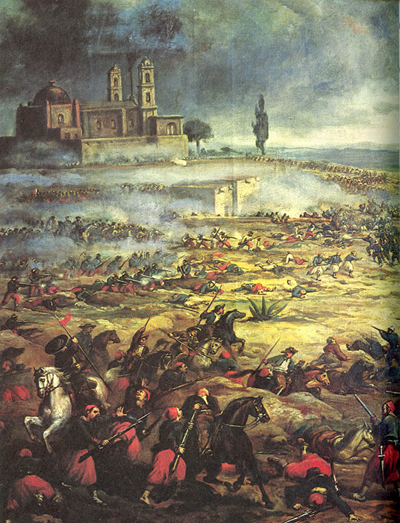
Battle of Puebla
Cinco de Mayo has its roots in the French occupation of Mexico, which took place in the aftermath of the Mexican-American War of 1846-1848, the Mexican Civil War of 1858, and the 1860 Reform Wars. These wars left the Mexican Treasury in ruins and nearly bankrupt.

On July 17, 1861, Mexican President Benito Juárez issued a moratorium in which all foreign debt payments would be suspended for two years.  In response, France, Britain, and Spain sent naval forces to Veracruz to demand reimbursement. Britain and Spain negotiated with Mexico and withdrew, but France, at the time ruled by Napoleon III, decided to use the opportunity to establish a Latin empire in Mexico that would favor French interests, the Second Mexican Empire.

In late 1861, a well-armed French fleet stormed Veracruz, landing a large French force and driving President Benito Juárez and his government into retreat. Moving from Veracruz towards Mexico City, the French army encountered heavy resistance from the Mexicans near Puebla, at the Mexican strongholds of Fort Loreto and Fort Guadalupe.  The French army, led by Napoleon III and 8,000 strong, attacked the much more poorly equipped Mexican army of 4,000. Yet, on May 5, 1862, the Mexicans managed to decisively crush the French army, one which, according to an article in Philadelphia's The Bulletin daily newspaper, was the best army of the time.

At the same time of the French occupation of Mexico, America was fighting its own Civil War, a war in which Napoleon III had a great deal of influence.  What most Americans do not know or realize is that they also owe a lot of gratitude to the Mexican defeat of the French.  It is because of this defeat that Napoleon (who was aiding the Confederacy in hopes the war would divide America, making it an easier target and less of a threat on the French Empire), was unable to deliver much-needed supplies to a struggling Confederacy, which only grew weaker.  The Union was able to defeat the Confederate Army and unite America on account of the Confederacy's weakened state.
{Source: Wikipedia}

Now you know--and knowing is half the battle--but you are probably scratching your head and wondering what any of this has to do with Fantasy, writing, or World Building... right?

Simply this:  Why not create a "holiday" for your "World", one which is celebrated blindly by the world's denizens, and then have one of your characters explain its true origins to another character (or group of characters) as an excuse/outlet to describe the details of an epic battle scene from the past that now has repercussions on current events within the book?

Perhaps it sounds like a stretch to you, but I have an instance in the third book of my Chronicles of Aesiranyn series where another character does exactly that!

Or how about this... what if you were to create a world--an alternate history--in which France won the Battle of Puebla and took control over Mexico?  What if the South won the Civil War because of it? What would the world be like?  What Mexico still be called Mexico, or perhaps some French variation of the word?  Would Napoleon have succeeded in dividing America?

So many other questions arise, each with an answer that provides yet another scenario/possible storyline, and this is just one of many plots along the history of the world!

I am hoping that this post created some inspiration for some notebook scribbles!


Happy Scribbling... er, Scribing,


Thursday, April 26, 2012

World Building Series: Characters -- Part I

Good Afternoon Everyone!

Although I could go on (and on) about Language Construction within my World Building Series, I've decided to break away from it momentarily to discuss the most important area of writing: Characters.

Some may argue that it is the plot of the story that is the most important, and while it is definitely high on the list, I feel that the characters drive the plot and engross readers more so than the plot itself.  As a writer, I can attest that my characters usually write the story for me.  Their personalities and idiosyncrasies catapult the plot from Chapter One until the book's conclusion in a way that scene-writing/plotting almost seems like a waste of time (this is absolutely not the case, of course, but more on that in a future post).  It is for this reason that having relatable characters is crucial to your story's likability and success.

When a story idea forms in my mind, I take the time to jot down the basics of it and store it safely in a place where it can... ferment, for the lack of a better word.  It is while it is fermenting that I do the other important processes in pre-writing--and at the top of the list is character sketching/mapping.

Character sketching for me is not actually what the name suggests.  Try as I may, I am no artist (in the sketching/painting sense) and cannot draw for the life of me.  Instead, I answer a series of questions about a character's general physical appearance (gender, height/weight/build, age, hair & eye color, any outstanding and notable features).  I usually will use the general descriptions I have created and search through Google Images for photos of actors/actresses that fit the profile.  For me, having a physical image in front of me makes it easier to refer to while writing.  (Check out my Post on Pinterest for an example on how to organize your images).

After I've done the afore-mentioned, I will also answer questions about my characters intellectual and emotional qualities (intelligence level, skills, occupation, family life, religious beliefs, relationship status, et cetera).  Lastly, I answer any questions that pertain specifically to the character's direct (or for minor characters, indirect) influence on the plot.

Once I have a handful of characters mapped out, I usually let those ferment as well as I move on to the other aspects of pre-writing.  By the time I come back to them, something has inevitably always changed--so I go ahead and complete the edits then and there while the thoughts are fresh (note: I almost always save the original sketches, however, just in case I need to go back to them for whatever reason).

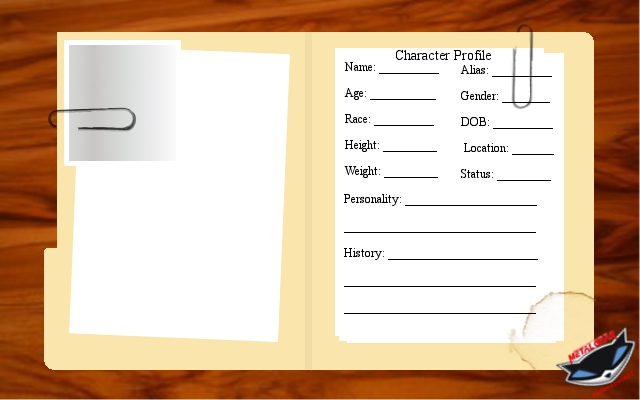
Personally, I make my own template and print them out on index cards, but there are many great resources on the internet for Character Sheets--pre-made templates for the types of questions I mentioned above.

Here is one example:
Source Credit: redsoxrock01 @ deviantArt

Well that's all for now, kiddos :)  Stay tuned for the next post in this series!


Wednesday, April 4, 2012

World Building Series: Language Construction -- Part III

Well kiddos,

As promised, here is the Third installment of the Language Construction Series, part of my larger World Building Series.

When creating written characters for your language, there are a few questions you must ask yourself:


  • What will the characters of your language look like (runic, script, hieroglyphic, or other)? 
  • Will there be more than one representation (i.e, a runic for one class [or a specific race/species] and a script form for another)?
  • Will your language resemble any known languages (Futhark, Arabic, Cyrillic, Mandarin, Korean, Egyptian, Irdu, et cetera)?
  • In what direction will your language be written (left to right, right to left, vertically)?
  • What will the punctuation look like—if any?
  • How will numbers be represented (digits, or symbols to represent specific quantities)?
  • Will you use a different character for each sound, or will diacritics be used?
There are obviously more questions that can be asked, but those are a few to ask yourself in the very beginning stages of planning.

I'm not going to mislead you in any way.  Creating the language was the easy part for me; creating the written form of it, however, was no easy task.  I struggled with it for years, even long after I had nearly finalized the actual language itself.  So many times I scrapped sketches, never happy with the way it turned out.  Believe it or not, I finished my first manuscript months before I finally sketched out a set of characters with which I was happy.  

Although, not completely.

It took a few more months of tweaking, but I finally completed it...


Copyright (C) Joshua Allen Mercier (The Bearded Scribe)
Unauthorized Reproduction Prohibited
Please feel free to leave comments with any feedback or questions you may have on Constructed Languages, and Good Luck with your own languages!

Happy Scribing,


Tuesday, April 3, 2012

World Building Series: Language Construction -- Part II

Welcome Back :)

When I left off in the World Building Series--in particular, Language Construction--I was discussing the use of combination forms of words to create other words.  In the last post I touched on how I used combination forms, like Tolkien, to create proper nouns in my language.

Just like we have obvious place names in English (and other languages, for that matter) that comprise of two or more smaller parts to create a larger concept, i.e., Pennsylvania [Penn (Welsh surname meaning "head"... here meaning Admiral William Penn, to be precise) + sylvania (woods, from the Latin sylvan meaning tree): therefore meaning "Penn's Woods"].  Other examples include MontrĂ©al [Mount Royal], Philadelphia [Love+Brother=City of Brotherly Love], Springfield [self-explanatory], Hartford ["deer crossing"], et cetera.

I used the same principles when naming the places in my language, as well. Here are three examples:


Aesira·nyn {pronounced AY-SEER-RAH-NIN} is the name of the land in which my story takes place; its name is comprised of the elements: aesira (majick or enchantment) + nyn (from nuynos, meaning land)... therefore meaning "Land of Enchantment."


Aijir·heleg {pronounced EYE-YEER-HELL-LEG} is the name of the capital of Aesira·nyn and the city in which the Garnet Throne is located.  Its name is comprised of the elements: aijir (meaning city) + heleg (meaning holy)... therefore "Holy City."


Shann·yhmn {pronounced SHAH-NIN (think of the name Shannon, but with is the name of the longest river, located in the central part of the main continent (called Selest·erem).  It flows from Tyr·shyr (meaning "Pool of Blessings"), from which its name derives: shann (meaning blessing) + yhmn (from rohmyn, meaning river)--itself meaning "River of Blessing."


Alright... please bear with me while I shift back to the first part of my first post on Language Creation for the next part of this one...
If you don't remember, I'll refresh all of your memories:  Using an existing language to create your Constructed Language (or Conlang, as it's colloquially known).

As I mentioned, I used several.  More specifically, I used the roots of words from various languages to create my own by attaching my own "SET" endings, which I worked out separately.  For example:


My own noun endings (one of a few possibilities) are -yn (singular) which changes to -un (plural).  Deryn or derun {pronounced DAIR-RIN or DAIR-ROON}, meaning pheasant, is borrowed from the Welsh word for bird, aderyn.  In this case, my SET noun ending happened to be the ending of the original word, though that is a rare case.  The Welsh pronunciation wasn't important to me, as I used my own set of characters, which come with a set pronunciation.  No exceptions.

Let's look at another:

By chance, this example uses the same noun endings as the previous.  Aeryn or aerun {pronounced AIR-RIN or AIR-ROON}, meaning copper, is borrowed from the Old English word for copper, ar.  Of course, the plural of copper is theoretical and rarely used, but that is for another discussion.

Now let's glance at verbs (always the most fun, in my opinion).  Verbs in most Latin-based languages comprise of a root and an ending, which has its own standardized conjugation for tenses and for the pronouns for which they are conjugated.  Being of French heritage and also a non-fluent speaker/writer/reader of the language, I decided to borrow this idea of verb endings with standardized conjugations.  In Teangriel, there are four (4) different verb endings.  I won't bother getting into all of them, but I will show you an example of a verb and its conjugation for the present tense (I have my own non-standard set of tenses, which might irritate some of you, but they are the tenses that suited the needs for my novel):


The pronoun suffixes are only used in formal speech.  In the rural parts, only the pronoun and the conjugated verb is used.  On a side note, there is only one irregular verb in Teangriel, and its present tense conjugation is  the origination of the pronoun endings you see above...


Well kiddos, I've probably bored your heads off!  I will end this post for now, but stay tuned for the next part in the series, in which I will discuss how I created the "TRUE" form of my language as it is written and seen by the native speakers.


Friday, March 30, 2012

World Building Series: Language Construction -- Part I

Hello Readers :)

I decided to do yet another post within my World Building Series, this time focusing on language construction.  Being a lover of language, especially in Fantasy, I believe this is one of the many elements that sets the genre apart from the rest.

I mean... How exciting is it to open up a new book and find a glossary?!?  I love the challenge and the 'secret' invitation to get inside the head of the author.  How the author forms the language, how it is used by the characters, and how the author incorporates it into the book are all things that make for a stimulating read.  At least for me.

{Please leave a comment on this.  I want to get to know my readers, and not only their thoughts on my posts, but also their thoughts on this in particular.  Having created two different languages for my series The Chronicles of Aesiranyn, I want to also find out if my audience is as receptive of constructed languages as I am.}


I spent years trying to perfect my first language (Jeremiah can attest to this).  At first I got in my own way.  I was just creating words--with truly no fluidity or method of organization.  I even complicated things by trying to incorporate too much complexity into the language.  I was my own worse enemy.

I finally had a breakthrough when I realized I needed to simplify.  A lot.  It was overhaul time, but where to begin?  Sure, the words I created were wicked neat (as we say in New England) and evocative of their true meanings, but there was no cohesiveness to their styles or potential etymology.  I almost scrapped it completely, but I ran across something that changed my outlook on Tolkien's genius and fantasy languages altogether.


 Jeremiah and I took a sojourn to Lansing, Michigan one chilly winter's afternoon and our paths led us to a newly finished outdoor mall.  I can't recall if we went there specifically or happened to stumble upon it, but at any rate, they had one of the largest bookstores I had ever seen (I've seen much larger ones since, but this was a great find for us at the time).  While browsing the shelves, my eyes were drawn to the bright red binding and the title of the book pictured above: The Languages of Tolkien's Middle-earth by Ruth S. Noel.

The image is perhaps too small to read the block of text under the title, so I will oblige all of you with a transcription: A complete guide to all fourteen of the languages Tolkien invented.


Yes.  You read it correctly.  Fourteen!  I figured if it gives me even the slightest inclination as to how he did it with fourteen, then surely I should be able to create at least one!

I read that thing from cover to cover.  Twice.

And then I re-read it with a journal and pen to take notes on all the helpful information it contained.  It is in no way a reference guide to how Tolkien did it, but it contained enough clues for me to discern a pattern and methodology.  And with my journal now full of notes, hints, and questions for me to ask myself about my own language, I decided to jump in head first.

I also discovered something important.  Tolkien didn't create his languages from scratch, he had a little help.  I am not saying that Tolkien wasn't a genius because he didn't create his language from scratch--because he absolutely was one; I am saying that perhaps the fact that he decided to use an existing language for guidance proved his very genius.  Why not borrow parts of a language that already has all of the 'kinks' worked out?  It made perfect sense to me, so that's what I decided to do.

As Tolkien based his language upon Finnish (whether it was just one--or perhaps all fourteen--I am not certain), I, too, decided to structure [at least parts of] my language on an existing one.... well, many, actually.  Parts of my language are derived from Gaelic, parts from French, parts from Latin, parts from Finnish, parts from Hebrew (the list actually goes on, but I will spare you from its entirety).

Also, like Tolkien, I decided to use combination forms of words so that I could create better-formed proper nouns--names of characters and places and important things.  The name of my language itself is a perfect example, so let's take a closer look at that.


The word [pronounced TAY-AHN-GREE-EL] is formed from two combination forms to create a single word:  teang (from the word teangos, meaning tongue, or language) + riel (the word for silver)... which means that the word "Teangriel" actually means Silver Tongue.

All of my characters names, place names, and proper nouns are formed this way, the only difference is that the combination forms are usually separated by a "·" symbol--an unpronounced, but needed, separator.  The word Teangriel, of course is one exception and is formed irregularly... though at one point in my world's history, before it was dropped because the two parts of the word became one over time, it existed between the "G" and "R" of the word.

Here is an example of a regularly-formed proper noun :


Quin·riel [pronounced QUEEN-REE-EL] is formed from quin (from quielan, meaning holly) + riel (the word for silver).  You guessed it: the name means "Silver Holly" and is the name of the Tzandas (or, for the closest English term, Princess) of Aesiranyn.

Since this post is getting rather long, I will end it and continue where I left off in a future post.  Keep your eye out for it! :)

Until then,


Saturday, March 24, 2012

World Building Questions: Rules of Majick


  • Where does majick come from: divine source, a tangible energy or resource, the personal will-power of the caster, et cetera?
  • Is the source exhaustible?
  • How does a caster tap into majickal energy?
  • Does it require some rite of passage (investing one's own energy or lifeforce into an object; divine selection or selection of some other kind; specific knowledge/education; creating, being given, or inheriting a permanent connection to the source/energy; successfully summoning a demon/angel/spirit/divine being/et cetera)?  -Or- Does it just happen naturally because of study or as a part of growing up?
  • What things can majick do?  What can it not do?  (i.e., what, if any, are the limitations?)
  • How much is known about the laws of majick? How much of what is "known" is wrong?
  • What does one need to do to cast a spell (an elaborate ritual, recite spell/poetry, combining the correct ingredients)?
  • Are there objects like a staff, a wand, a familiar, or a crystal ball that are necessary or useful to have before casting spells?
  • If so, where and how does obtain these objects?
  • Can any wand be used by any wizard or are they wizard-specific?
  • How long does it take to cast a spell? Can the spells be stored for later, instant use? Do spells take lots of long ritual, or is majick a "point and shoot" kind of thing?
  • Can two or more wizards combine their power to cast a stronger spell, or is majick done only by individuals? What makes one wizard more powerful than another--knowledge of more spells, ability to handle greater quantities of energy, having a more powerful divine being as a patron, etc.?
  • Does practicing majick have any detrimental effects on the wizard (such as being addictive, crippling/injuring, slowly driving the wizard insane, or shortening the wizard’s life-span)?
  • If so, is there any way to prevent these effects? Are the effects inevitable in all wizards, or do they affect only those with some sort of predisposition? Do the effects progress at the same rate in everyone?
  • What general varieties of majick are practiced (e.g., herbal potions, ritual majick, alchemical majick, demonology, necromancy, etc.)? Do any work better than others, or does only one variety actually work?
  • Are certain kinds of majick practiced solely or chiefly by one sex or another? By one race or culture or another?
  • Does a wizard's majickal ability or power change over time -- e.g., growing stronger or weaker during puberty, or with increasing age? Can a wizard deplete all of his/her majick, thus ceasing to be a wizard?
  • Can the ability to do majick be lost? If so, how -- overdoing it, majickal attack, depletion, et cetera?
  • Can the ability to do majick be forcibly taken away? If so, how and by whom?
  • What is the price wizards pay in order to be wizards--years of study, permanent celibacy, using up bits of their life or memory with each spell, a personal sacrifice (killing a family member -- perhaps to absorb their majickal energy), a required daily or periodic sacrifice (say, to a demon), sacrifice/loss/depletion of beauty/looks, et cetera?

World Building Series: The Rules of Majick

Hello Again Everyone,

Welcome to the third installment of my World Building Series of posts -- The Rules of Majick.

There have been many fantasy books out there that include their own majickal system--rules, principles, limitations, et cetera--that govern the usage of majick and its consequences... and each with unique answers to specific questions their authors were forced to ask in order to set the basic building blocks for the systems.


Some books that come to mind, just to name a few, are J.K. Rowling's Harry Potter series (of course), Larry Niven's Warlock series, and Ursula K. Le Guin's Earthsea series.  In the first and third series, the majick is driven by language: Harry Potter by a Latinesque (if only that were a real word) language--specific words spoken to evoke specific purpose (Rowling also requires the use of a wand or staff in order to produce the spells); and in Earthsea, Le Guin uses the concept of an original, primordial language by which the creators of the world originally named things. People who learn these names are able to control the things named, an ability shared by both the wizards who study the language, and the dragons whose native tongue it is.  And in the second series mentioned above, the majick is derived from mana--an exhaustible resource in the environment surrounding the caster which can be depleted.

In creating the majickal system for my first series, The Chronicles of Aesiranyn, I asked myself question after question in order to narrow down how my characters would use and manipulate majick and also what the results and consequences of that usage would be.  Like Rowling and Le Guin, I decided to use language (perhaps for the mere fact that I am a self-confessed linguaphile).  I also, like Rowling, decided to require a wand or staff in order to produce a spell (more on that later), and like in Earthsea, the spells are derived from an Ancient (even protected) language that must be learned in order to produce the proper spells.  There are limitations (as there should be), though if the character is a member of the Imperial family, then their limitations are less--and even more so if they are the ruler because their majick is derived from the throne upon which they [figuratively] sit.

My majick system is simple, yet it is complex in all of its different parts. It is elemental majick, of sorts, and it is also broken down into general color categories and then more specific types within the category.  As I mentioned before, the majick in Aesiranyn requires a wand or staff, which is crafted by a wandmaker.  The intended recipient of the wand/staff must make a blood sacrifice, and then the majick within his/her blood chooses elements, which also hold their own majickal properties.  Aside from wands being required, there are other specific spells as well that require other majickal artifacts in order for them to work.  I've probably given away too much... but hopefully it was a teaser for the future readers of the books!   :)

The greatest advantage a writer can have is to know their own world inside and out (without overbuilding, of course), and in order to do that, they must constantly ask questions before beginning to write their stories--and just as importantly, while they are writing it!

Below is a link to the list of questions I asked myself (a page that will remain a permanent resource on this blog), which I am offering to all of you in your own quests for the ever-illusive realm of majick.

As always... any CommentsFeedback, and Questions are Welcomed, Needed, and Encouraged!

Good Luck in this and all of your quests,


Tuesday, March 20, 2012

World Building Series: Overbuilding

Welcome Back Everyone! :)

Here is the second installment of my World Building Series of blog posts, as promised, which has to do with the dreaded dilemma of Overbuilding.


Overbuilding can cause serious procrastination for a writer, and Jeremiah can attest that I am perhaps the worst culprit of this--or at least I used to be.  Attempting to perfect my languages was the biggest distraction for me, and in doing so, I never actually got much writing done.  

I had created three separate languages for my first series (a separate languages for two of my races, and an Ancient dialect used for majick), and I was never completely happy with the first two of them.  I kept going back to 'tweak' the languages, at first trying to make what I already had work, and then trying to reconstruct them altogether.  But it was when I finally decided to simplify that I chose to scrap the weaker parts of both, combining the stronger parts of each and forming a universal language for the world instead of separate ones for the two races.  Honestly, a lot of this was decided when I realized that I needed more than two races in my series, which meant possibly creating a separate language for each; and just like that I realized how daunting the task at hand would be and opted to create a unifying language for all the races.  It seems like an easy way out--but I had to ask myself the important question: how much of each language would honestly go into the various books in the series?  Which meant also asking: shouldn't I be spending more time on the actual plot?

I can tell you from experience: just as there are flaws in the world we live in, the world you create for your story will never be perfect or to your liking until you actually write the plot.  Writing the plot irons out the flaws and answers the questions that are left unanswered while you are in the initial building stages.  

Or maybe there are not flaws, per se, but minor issues that arise while writing.  For instance... whereas I was happy with my Ancient dialect used for the majickal system in the series, while writing one of the chapters where the majick system is the most prevalent, I realized that I actually need to 'tweak' and define the language a little further to fit the rules and limitations of the majick.  This type of building where you build it once it's needed--as opposed to overbuilding and never using some of the material in the actual writing--is highly encouraged.  I feel the choice made my majick system more believable and understandable (not only to my readers, but to me as well).

Thank you for your support of my Blog, and stayed tuned for the next installment in the World Building Series.  I haven't quite decided between a couple topics, so this next one I will have to leave as a surprise.

Have A Great Night!


Wednesday, February 29, 2012

World Building Series: Introduction and Fundamentals

Greetings Readers!

While writing on my current project, Valkyrie, the other day, an idea for a post started to formulate in my mind.

World Building.  

Fantasy and speculative fiction or not, every book (and movie/screenplay) has it.  Even non-fiction has a bit of world building involved.  An author must know the limits and facts about the world in which he/she is writing before he/she can construct a believable, fully-formed story.  If an author's facts have inconsistencies or flaws, he/she can discredit his/her knowledge of the craft, and by doing so, quickly lose readership.  Simply put: if you don't know the world in which your story takes place, how are you supposed to describe it to your readers in its fullest capacity?

I have been pondering at how to go about writing on such an extensive topic--or even how to begin doing so, for that matter.  After much deliberation, I decided that breaking it down into several posts would be the most practical option, not only for my personal choice to put constraints on post lengths, but also to get more detailed and concise, content-related posts for you, my readers.

This first post will focus on the initial steps to world building, intertwined with my own anecdotes of trial & error with my own writing, and will also introduce the next post in this specific series.

Before I ever knew what world building was, I was unknowingly creating my own worlds.  After reading books like The Egypt Game, The Bridge to TerabithiaThe Chronicles of Narnia and The Lord of the Rings, I became obsessed with creating worlds of my very own.  I sketched maps galore, created languages (minor undertakings back then), secret codices with which I could write notes to my friends, and planned out entire cities in which to create my stories.

Of course, those worlds failed me; more correctly, I failed them because I didn't know enough about my creations.  Sometimes I would sketch pages and pages of maps with great detail, but I neglected to populate it with creatures and characters that were believable for the setting.  Sometimes, vice versa.  Other times, I forgot to ask myself important questions whose answers would have provided me with a connection between the different aspects of my worlds.  I constantly wrote myself into corners--or worse, circles.  My writing was all jumbled--mismatched additions, not all too dissimilar from the Winchester House--without any coherence whatsoever.  I neglected to make the full blueprint before building the house; but fortunately, with training and practice, I realized the errors and remedied them.

The Winchester House - Santa Clara Valley, California
Most ideas for stories usually develop long before a writer even thinks about world building. Unfortunately, I feel that this leads to weaker stories in the end.  I am saying this from experience because the first few starts at my now-finished manuscript were torturous.  My characters and my world felt disconnected and, to be honest, a bit contrived. In my opinion, it is much easier to build believable characters inside of a defined world than to a build a foreign world around a cluster of characters.

Asking yourself fundamental questions will help guide you in creating the blueprint; and creating a basic blueprint for your world before you go any further will save you a lot of headache.

The first set of questions we will discuss have to do with Earth settings and their variations/possibilities:

1. If this story takes place on Earth, does it occur in the Past?
2. Present?
3. Future?
4. Some alternate version/history of Earth? [for instance, an Earth that has been decimated by a nuclear war or asteroid? A post WWII Earth in which Hitler had won?]

Each answer should and will produce more questions for you to consider, and each answer will also narrow down the genre/category of your manuscript.  Let's take our two examples from above, starting first with a post-asteroid collision.

5. When, where, and how did the collision happen?
6. How did it change the landscape/structure/rotation/orbit/population/technology of the Earth?
7. Were there any alien life forms or microbes on the asteroid?  Or maybe some advanced technology?
8. If yes, how did that change the landscape, environment, or population?  Did it change the genetic makeup of humans/animals/plants? On the negative side, did it bring disease or famine?  On the positive side, did the asteroid's introduction create a superior human/animal/plant?

As you can see, each answer spawns a whole set of additional questions, which then defines the conflicts and plots.  Placing characters within this constructed world is now a breeze.

The questions for our second example might look a little like this...

5. How had Hitler and the Axis forces defeated the Allied?
6. Did Hitler continue his mass genocide?  And if so, how has this affected the population of Earth? Did Hitler succeed in creating an Aryan race? Does everyone speak German?
7. How long after the defeat does the story take place?  Within Hitler's lifetime? Twenty years later?
8. Are there secret Allied forces still hiding out from the Nazi Regime? Are they physically hiding out (in, say, underground caves) or pretending to blend in with society while maintaining their Allied lifestyles in secret?  Are there plans to overthrow the government?

Literally dozens of scenarios with an exponential amount of questions can arise from the first 4 questions above, and that is only dealing with Earth or Alternate Earth settings and plots.  The second part of this post will deal with all other settings.

1.  If the story does not take place on Earth [or any variation], is the setting a known one (i.e., Mars, the Moon, or the Andromeda Galaxy) or some distant or unknown planet/moon/galaxy?  Is it even part of our known universe?
2.  If unknown setting, how was the setting formed?  Evolutionary (like the Big Bang Theory)?  Or Mythologically (created by omnipotent beings)?  Or a combination of the two?
3. How does the setting differ from Earth?  How is it similar?  Landscape/flora/fauna differences and similarities? Does it still have earthly forces (like gravity)?  Does it have unearthly forces, i.e., majick (more on this later)?
4. Is it populated by more than one race/species?  Are they humanoid?  Are all of them intelligent?
5. Are there areas with concentrations of certain races, or do all the races live together?
5. If there is majick, where is it derived from (sun, moon, water, earth, air, blood, artifacts, etc)?  Are all the races majickal?  Only a few?  One?
6. Are the majickal races exalted or suppressed?  Is a majickal race the ruling race?  Does it view the other races as unequal because of its lack of majick?  Or vice versa?

The questions are endless, and so are the answers.  And each answer lends itself to a different aspect of your world--from character races, history, politics (power struggles, classes), mythology (creation myths, deity current involvement and interaction), languages (spoken, written, ancient), majick (source, limitations, how it's produced and used), et cetera.

The list is infinite, and I know I barely touched the surface when it comes to introducing World Building, which kind of brings me to introducing the topic of the next series in this post:  Overdoing it!

I welcome any questions or comments and would be happy to respond to them.

Stay Tuned for the next post in this series,


P.S. If you are here visiting the page and reading this post and are not yet a member, please click the links to the left to sign-up. It's quick and simple.
Related Posts Plugin for WordPress, Blogger...