Showing posts with label Characters. Show all posts

Thursday, June 7, 2012

World Building Series: Characters -- Part II

Hello Beardies!

It has been quite some time since I have posted within the World Building Series, and for this I apologize. I am not sure how many of you actually follow the WBS, but it will be a constant and regular feature on the blog--at least until I run out of topics within the series to discuss.

This post will also link to my post titled Native Americans: Mythical Creatures? in the sense that it is about using an existing idea or representation of something already in existence (in the case of the aforementioned post, it referred to an actual peoples, the Native Americans) as inspiration for a unique creation within your own writings.

This post, however, does not refer to living peoples as inspiration; it instead refers to the worn-out, stereotypic, and now clichéd examples of Races within the Fantasy genre--especially Epic Fantasy, but now even wandering amuck in Urban Fantasy, too.

Too many times I have picked up a new release at the bookstore and, without having to even crack the binding, I can tell you exactly what the characters look like.  When Tolkien--the indisputable Father of Fantasy--released his works, the races within the pages became the model of all fantasy novels to follow.  Unfortunately.  Not that Tolkien's creations aren't worthy of mimicking, because they are, but definitely unfortunate due to the fact that his creations became stagnant when they appeared within the countless works of others.  And most of the time, by default, so did the plots.
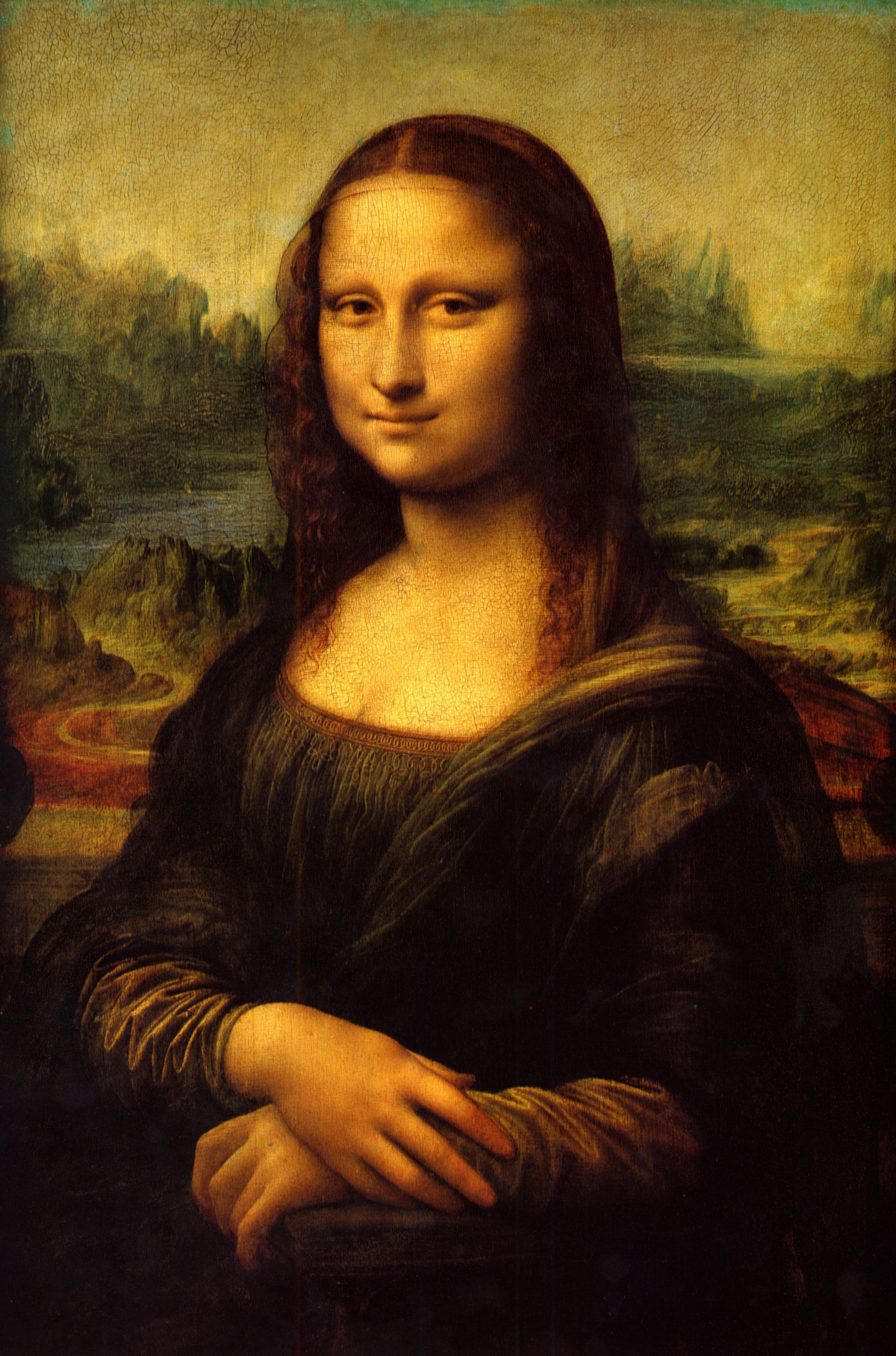

How boring would going to the museum be if all the paintings were of Mona Lisa--but the engraved plaque under each of the frames bore the name of a different artist?  Or every time you attended the Symphony the Orchestra played the same piece--but the program cover announced a different title and composer despite the fact?

See my point?

In the case of the latter example, many composers used the works of others as inspiration for their own pieces--and, in listening, you can definitely hear it--but they did not copy the piece note for note.  They borrowed themes.

Do the same for your characters.  Not all fantasy stories have to contain elves, dwarves, fairies, dragons, centaurs--dare I mention vampires and werewolves?--but it is okay to model your own races upon these and create fresh and unique--but still fantastical--creatures.  I know I have, and that was most of the joy I had while writing.


There are plenty of sources of inspiration for original creatures and characters:  mythology, folklore, religion, and even, for example, some of the bizarre but beautiful creatures that inhabit our marvelous planet such as the leafy seadragon (pictured above).


Two of my most treasured sources for creature inspiration--other than the chaos swirling in my head--can be found on my bookshelf.  Both books cover all of the sources above; one is a field-guide, while the other is a glance into the symbology behind the creatures.


You can purchase either one by clicking on the images, or by visiting your local Barnes & Noble.


I plan on continuing this specific topic in future posts, expounding upon how to develop your creatures by borrowing elements from the above-mentioned, and other, sources.


Stay Tuned & Happy Scribing,


Friday, May 18, 2012

The Importance of Plotting

"He who fails to plan is planning to fail."
~Winston Churchill

Good Ev'ning Beardies,

I apologize in advance for my lack of posts the last couple of days, but as Steinbeck once said, "the best laid plans of mice and men often go awry."

Writing stories is much like following a recipe while baking.  There are specific ingredients that need to be acquired and certain steps that need to be followed in order to get the cake to rise properly.  Sometimes experienced chefs can stray from the outlined recipe and create a masterpiece, but they must practice first with following enough of them to the tee in order to warrant the dissension.

Plotting isn't rocket science, but the task is not an easy one either.  When you plot your story, you are in essence deciding on how you will showcase the events to the reader as they unfold.  Think of a play or a movie, and then think of the scenes within either.  What happens in each scene?  Who are the characters in the scene, how do they interact with one another (perhaps they don't), and how do they propel the scene to the next?

A successful plot-line includes specific ingredients that are carefully mixed together: clever and believable characters, masterfully woven dialogue, perfectly placed action, and--in my humble opinion-vivid and streamline description of the characters and their surroundings without overwhelming the character.  And amongst the other ingredients of plotting is one we've all heard about throughout our schooling--writer or not.

The infamous hook.

As much as I love description in fiction, too much of it without reason is a burden the reader will choose not to bear.  Too much description--especially the purely prosaic type--at the forefront of your story will bore your reader, and they will quickly lose interest.  As an author, it is your duty to lure your readers--to tempt them to turn yet another page, and another--into the depths of your book until it is too late for them to turn back ;)  Personally, I like to lead my stories off with a bang, which warrants the reader turning the page to find out what happens next.  Action, however, doesn't have to be a stereotypical high-speed chase or a hostage situation (I'm not saying it can't be, though); action simply means an impetus that alludes to an obstacle or conflict whose theme will perpetuate throughout the plot-line.  How did your character(s) arrive at said obstacle/conflict?  And what drives the reader to turn more pages: How will the character(s) overcome said obstacle/conflict?  Which brings me to the our next ingredient...

Conflict & Side plots.


Once you've hooked your reader--with a strong line and a barbed hook, hopefully--you must increase the tension in your plot by adding yet more conflict.  Additional conflict for your character(s) to overcome may simply be an inner struggle, it may be conflict between characters, or it may be another obstacle to overcome.

With each introduction of conflict, there must come at least a partial resolution; and inversely, with each partial resolution, there must come another, more challenging conflict, building the tension to a major climactic scene.

Of course, however, there should be other happenings in the plot-line aside from the minor and major obstacles.  The other happenings provide a good source of side plots within the plot--family occurrences and interactions, social happenings and responsibilities, romantic intrigues, et cetera--yet none of them should overpower the main conflict within the story.

{Side note: Even though it should still never overpower, introducing another major conflict into the plot-line, which will eventually become main conflicts for subsequent books within a series, allows for some lenience as to how close a sub-plot can come to outshining (or overshadowing) the main conflict of the current story.}

Climax.


It is often a struggle with most beginner writers to develop an acceptable climax.  A writer may know from the point at which the idea for the story formulates in their head what the outcome of the story may be, but many forget to plot out the details of the actual outcome and the obstacles that lead up to that point.

The pay-off must not be contrived, and the build-up must be believable, set up by the many other events and choices that occurred in the prior pages.  But it's more than just a great showdown scene between the protagonist and antagonist, and it is necessary to take the proper steps so that your audience isn't blindsided by the climax, wondering where it came from or if it were even warranted.

Resolution.

As a writer you must also think of all possible outcomes for the resolution, and you must set up the obstacles ever so cleverly so that the resolution you choose is the only plausible one.  Otherwise, your readers will feel cheated and misled.

Simply throwing "The End" or "They lived happily ever after" just doesn't cut it.

Characters.


While Superman may seem entirely invincible on the surface, he still has his weaknesses.  It is important to show the strengths and weaknesses of all your characters, creating a multifaceted, true-to-life representation of human in everyday life.

Introducing strong (as in well-written) leading characters during your 'hook' will draw your readers to your characters much more quickly (if not immediately), but in the end, it is the characters themselves and how they respond/solve/fail at overcoming their obstacle(s) that will captivate your audience long after that last page has been turned and read.


I hope this helps your writing process; I know it has helped mine.

Happy Scribing,


P.S.  I always plot on 4"x6" index cards that are ruled on only one side.  I use the ruled side for writing out the scenes, and the blank side for jotting notes, such as characters, POV, scene conflict, and scene resolution (if applicable).

Saturday, May 12, 2012

Native Americans: Mythical Creatures???

Good Evening Beardies!

A few days ago I posted that I was doing some research for an upcoming post.  Y'all must have thought I was lying when that post never came.

So, without further ado...

The title of this post may confuse some of you--perhaps all of you--but it has to do with portraying (or should I say wrongly portraying?) a real people within your writing.  Please don't do it.

Why Native Americans you may ask?  Well, for starters, Jeremiah (my partner... my soulmate... my best friend) just happens to be Native American.  Native Americans are also a real people that are often used in the Fantasy genre for mystical reasons and are often portrayed inaccurately or as a stereotype.

Recently, a few books and movies have come onto the market that use the Native American peoples as a basis of their story (I bet you can guess which ones without me even needing to mention them).  Of course, there is nothing wrong with drawing inspiration from the Native Americans.  In fact, this I encourage.  But to color them with vibrant stereotypes that make them seem like a costume or a mythical creature that is no longer in existence is pure ignorance and only perpetuates said stereotype.


The books (and subsequent movies) I speak of are, of course, the Twilight saga.  I am sure it was not Stephenie Meyer's intention to misrepresent the Quieluete Tribe--not only portraying all of them with the stereotypical dark olive skin and the long, dark (straight) hair that we have come to expect (SPOILER:  Native Americans vary in appearance as much as you and I, whatever race you may be), but also associating a completely false legend with their tribe--however, intention or not, the ignorance was ever abundant.  What most people don't realize is that the Quieluete Tribe of the La Push reservation in Washington really does exist.

As do all Native Americans.  There are over 4,000 Native American Tribes to this day!  One of the reasons this post is coming later than I had intended is because I was at the Spring Moon Pow-Wow in Pembroke, North Carolina (home of Jeremiah's tribe, the Lumbee)--and I can tell you firsthand that Native Americans are alive and well!


Not only did Stephenie Meyer misrepresent the actual Quieluete Tribe (instead of drawing on it for inspiration), she completely dehumanized the Tribe by casting it alongside another mythical race of beings: the Vampires.  I applaud her for drawing on the great Native Peoples of this nation for inspiration, but had she created her own race from that information instead of portraying them as a caricature of a [mistakingly] long-dead people that only survives through costumes at Halloween, she would have gained much more of my respect.  (Imagine going to Party City and buying an "African-American" or "Jew" costume!  The nerve and insensitivity one would need to possess in order to do so is beyond my grasp!)


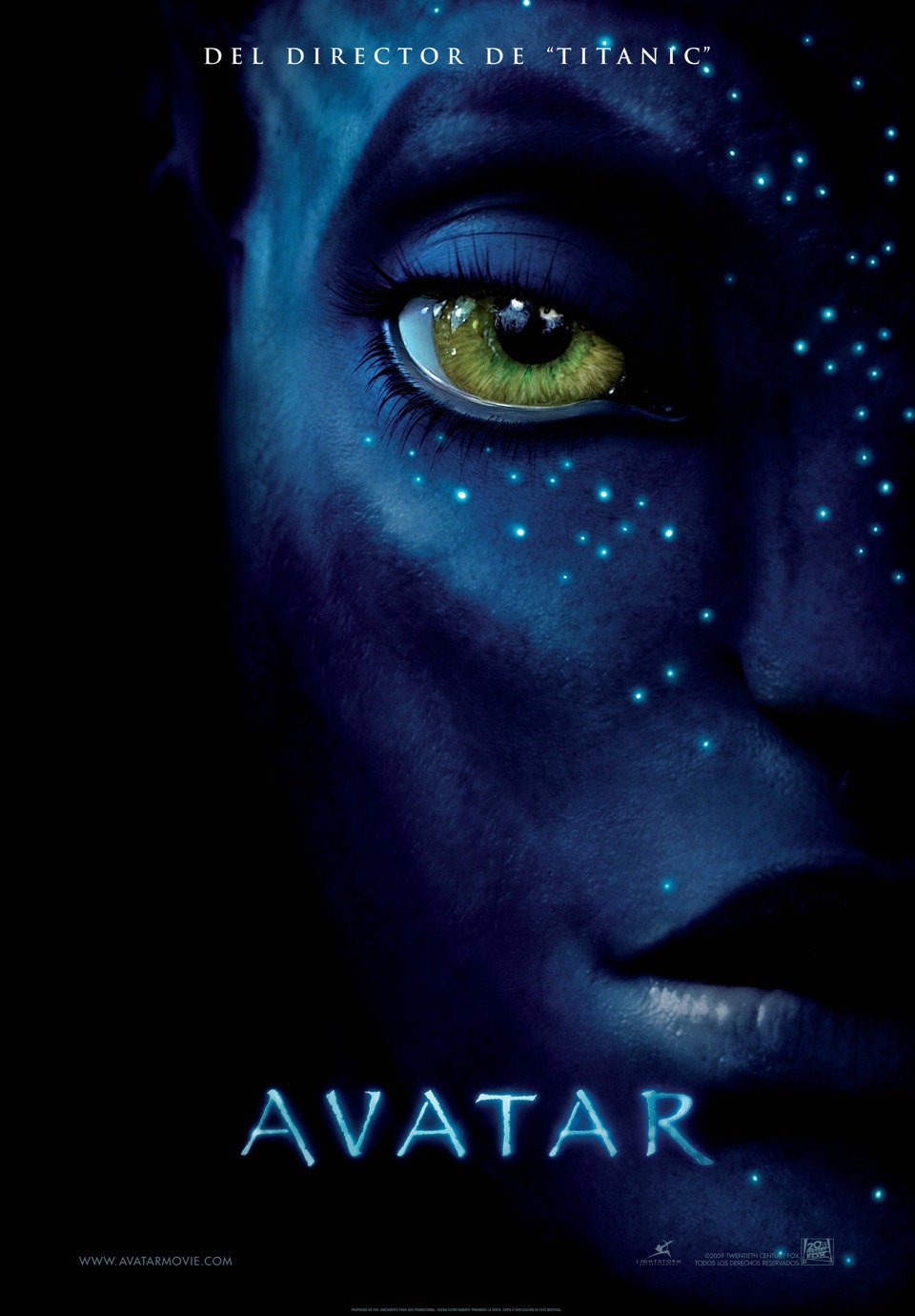
Take the movie Avatar, for instance.  This is the flip-side of the coin.  James Cameron drew a respectful inspiration from Native Americans for the Na'vi (though no formal association has been made, many relate the Avatar story-line to that of Captain John Smith and Pocahontas).  The Na'vi live off and connect with the land--the Great Mother--just as Native Americans still do today.  When they take from the land, they thank--not only Great Mother, but the creature/plant as well.  They are a peaceful people, unless provoked, and help the "visitors," much like the Native Americans did upon the "discovery" of America.  Unfortunately, unlike the Na'vi, the greed of the "visitors" caused MASS annihilation for the Native American peoples--but what we must not forget is that it thankfully did not cause extinction.

My entire point of this blog post is to beg you not to use an actual people as the basis of a race of characters in your own writing.  If you can't resist, however, at least have the common courtesy and be creative enough to not use the actual name of the people you intend to represent.  (Sorry Stephenie!)

I would love any feedback from my readers on fresh and creative character ideas that may or may not be based upon an actual existing people/culture (or ones in other books/movies that you have either enjoyed or disliked for this very reason) as an example for others who may be struggling to develop characters from scratch.

Happy Scribing!


Friday, May 11, 2012

World-Building, Folk Lore, and History...or...Be Patient with the Drunk!

Greetings, Beardies!


I have to confess: I have a character I’d like to lock in an asylum. Maybe you’ve had one too—mine is an old man, often drunk, usually surly, sometimes sad, but generally almost impossible to work with. I sense that he’s important to my story, but he frustrates me beyond belief. This past weekend, in frustration, I walked away from my writing and turned on my favorite Michigan folk music to try to clear my head. As the music played, I heard two songs in a new ways. I started researching the songs, and researching gave me an insight that will affect my writing for a long time. It ties in nicely to last week’s post about Cinco de Mayo and world-building, and I’d like to share it with you. Let me start by telling you about the songs….


“Voices Across the Water,” by Lee Murdock, is a ballad that tells the story of one Mr. Dennis Hale. In 1966, Mr. Hale, age 26, was the sole survivor of the freighter Daniel J. Morrell, which broke up in a storm on Lake Huron. Clad only in a pair of boxers, a pea coat, and a life jacket, Mr. Hale endured twenty-nine hours in a lifeboat in gale-force winds with air and water temperatures hovering just above freezing. Once rescued, he told a priest of several mystical experiences he had while waiting to be rescued. The priest advised him never to speak of these things again. He suffered terrible survivors’ guilt--wondering why he alone of the entire crew survived--and was ridiculed for his mystical experiences in the lifeboat.


The second song, “Requiem for the Mesquite,” also by Lee Murdock, is told from the point of view of a young Coast Guardsman whose first command, the US Coast Guard Cutter Mesquite, ran aground in Lake Superior in December 1989. The Coast Guard meant to salvage the ship, but the Lake Superior winter was too harsh. The elements severely damaged the ship and eventually it was decided to deliberately sink the wreck.

When I read these things, I was dumbfounded. I’m a Michigan girl born and bred; I have a long-standing love affair with all things nautical. The Mesquite wreck even happened in my lifetime—how could I not know about this? Exactly how much MORE is there to learn about and who can teach me? History is too often muddled and too easily forgotten. Likewise, the survivors of tragedies become outcasts. People who remember so much valuable history are sometimes revered, and sometimes scorned, but either way, they’re an invaluable resource.


So what does this have to do with my surly drunk character? Learning about this history made me think about him in a whole new way. It is not my character’s present condition that is important to the story, but his past and his knowledge of history. Suddenly I have an excuse to write battle scenes, an explanation for a cultural norm, a window into an important piece of history, and a plethora of new avenues to explore in my story. The crazy guy is suddenly more exciting and intriguing than frustrating. I’ve decided to give him another chance before I lock him up for a few pages. Obviously, I’m going to need to have patience with him, but I realize now there’s a reason that he is this way, and I’m looking forward to coaxing him to tell me. I wonder what heroic deeds he did, who his friends were, and why he refuses to speak of his past. It’s possible that this character will lead me into a whole new story. I’m looking forward to that possibility!


A character with a tragic, heroic, or unorthodox past certainly has valuable knowledge about your “world,” and that knowledge will make your “world” come even more vividly to life. Tap into it and see where it takes you!


Fair Winds and Happy Scribing!


***Both songs cited in this post are recorded on the album Great Lakes Chronicle by Lee Murdock, copyright 1998 by Depot Recordings. This album is available for purchase on iTunes, Amazon.com, and Lee Murdock's website.

Thursday, April 26, 2012

World Building Series: Characters -- Part I

Good Afternoon Everyone!

Although I could go on (and on) about Language Construction within my World Building Series, I've decided to break away from it momentarily to discuss the most important area of writing: Characters.

Some may argue that it is the plot of the story that is the most important, and while it is definitely high on the list, I feel that the characters drive the plot and engross readers more so than the plot itself.  As a writer, I can attest that my characters usually write the story for me.  Their personalities and idiosyncrasies catapult the plot from Chapter One until the book's conclusion in a way that scene-writing/plotting almost seems like a waste of time (this is absolutely not the case, of course, but more on that in a future post).  It is for this reason that having relatable characters is crucial to your story's likability and success.

When a story idea forms in my mind, I take the time to jot down the basics of it and store it safely in a place where it can... ferment, for the lack of a better word.  It is while it is fermenting that I do the other important processes in pre-writing--and at the top of the list is character sketching/mapping.

Character sketching for me is not actually what the name suggests.  Try as I may, I am no artist (in the sketching/painting sense) and cannot draw for the life of me.  Instead, I answer a series of questions about a character's general physical appearance (gender, height/weight/build, age, hair & eye color, any outstanding and notable features).  I usually will use the general descriptions I have created and search through Google Images for photos of actors/actresses that fit the profile.  For me, having a physical image in front of me makes it easier to refer to while writing.  (Check out my Post on Pinterest for an example on how to organize your images).

After I've done the afore-mentioned, I will also answer questions about my characters intellectual and emotional qualities (intelligence level, skills, occupation, family life, religious beliefs, relationship status, et cetera).  Lastly, I answer any questions that pertain specifically to the character's direct (or for minor characters, indirect) influence on the plot.

Once I have a handful of characters mapped out, I usually let those ferment as well as I move on to the other aspects of pre-writing.  By the time I come back to them, something has inevitably always changed--so I go ahead and complete the edits then and there while the thoughts are fresh (note: I almost always save the original sketches, however, just in case I need to go back to them for whatever reason).

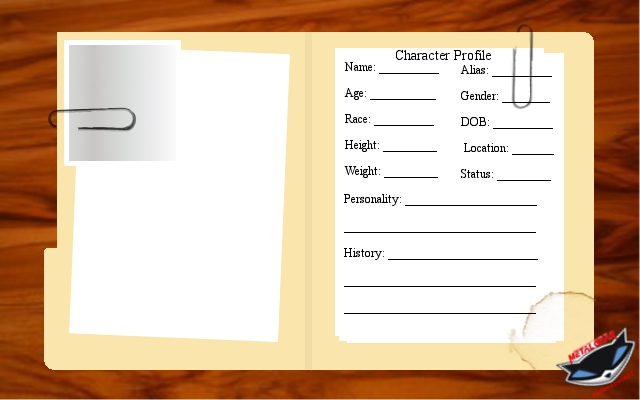
Personally, I make my own template and print them out on index cards, but there are many great resources on the internet for Character Sheets--pre-made templates for the types of questions I mentioned above.

Here is one example:
Source Credit: redsoxrock01 @ deviantArt

Well that's all for now, kiddos :)  Stay tuned for the next post in this series!


Related Posts Plugin for WordPress, Blogger...