Showing posts with label techniques. Show all posts

Thursday, June 7, 2012

World Building Series: Characters -- Part II

Hello Beardies!

It has been quite some time since I have posted within the World Building Series, and for this I apologize. I am not sure how many of you actually follow the WBS, but it will be a constant and regular feature on the blog--at least until I run out of topics within the series to discuss.

This post will also link to my post titled Native Americans: Mythical Creatures? in the sense that it is about using an existing idea or representation of something already in existence (in the case of the aforementioned post, it referred to an actual peoples, the Native Americans) as inspiration for a unique creation within your own writings.

This post, however, does not refer to living peoples as inspiration; it instead refers to the worn-out, stereotypic, and now clichéd examples of Races within the Fantasy genre--especially Epic Fantasy, but now even wandering amuck in Urban Fantasy, too.

Too many times I have picked up a new release at the bookstore and, without having to even crack the binding, I can tell you exactly what the characters look like.  When Tolkien--the indisputable Father of Fantasy--released his works, the races within the pages became the model of all fantasy novels to follow.  Unfortunately.  Not that Tolkien's creations aren't worthy of mimicking, because they are, but definitely unfortunate due to the fact that his creations became stagnant when they appeared within the countless works of others.  And most of the time, by default, so did the plots.


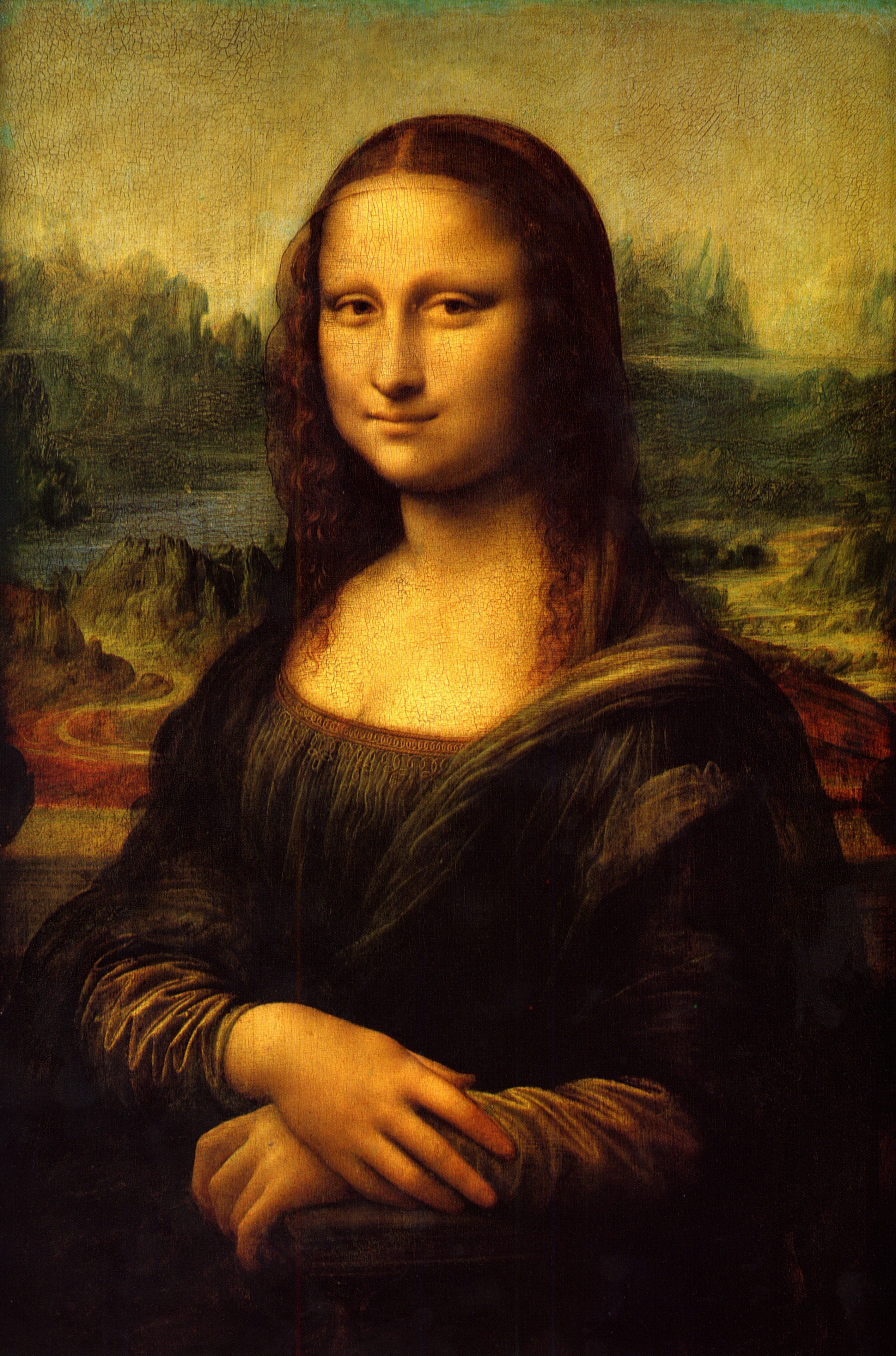
How boring would going to the museum be if all the paintings were of Mona Lisa--but the engraved plaque under each of the frames bore the name of a different artist?  Or every time you attended the Symphony the Orchestra played the same piece--but the program cover announced a different title and composer despite the fact?

See my point?

In the case of the latter example, many composers used the works of others as inspiration for their own pieces--and, in listening, you can definitely hear it--but they did not copy the piece note for note.  They borrowed themes.

Do the same for your characters.  Not all fantasy stories have to contain elves, dwarves, fairies, dragons, centaurs--dare I mention vampires and werewolves?--but it is okay to model your own races upon these and create fresh and unique--but still fantastical--creatures.  I know I have, and that was most of the joy I had while writing.


There are plenty of sources of inspiration for original creatures and characters:  mythology, folklore, religion, and even, for example, some of the bizarre but beautiful creatures that inhabit our marvelous planet such as the leafy seadragon (pictured above).


Two of my most treasured sources for creature inspiration--other than the chaos swirling in my head--can be found on my bookshelf.  Both books cover all of the sources above; one is a field-guide, while the other is a glance into the symbology behind the creatures.


You can purchase either one by clicking on the images, or by visiting your local Barnes & Noble.


I plan on continuing this specific topic in future posts, expounding upon how to develop your creatures by borrowing elements from the above-mentioned, and other, sources.


Stay Tuned & Happy Scribing,


Friday, May 18, 2012

The Importance of Plotting

"He who fails to plan is planning to fail."
~Winston Churchill

Good Ev'ning Beardies,

I apologize in advance for my lack of posts the last couple of days, but as Steinbeck once said, "the best laid plans of mice and men often go awry."

Writing stories is much like following a recipe while baking.  There are specific ingredients that need to be acquired and certain steps that need to be followed in order to get the cake to rise properly.  Sometimes experienced chefs can stray from the outlined recipe and create a masterpiece, but they must practice first with following enough of them to the tee in order to warrant the dissension.

Plotting isn't rocket science, but the task is not an easy one either.  When you plot your story, you are in essence deciding on how you will showcase the events to the reader as they unfold.  Think of a play or a movie, and then think of the scenes within either.  What happens in each scene?  Who are the characters in the scene, how do they interact with one another (perhaps they don't), and how do they propel the scene to the next?

A successful plot-line includes specific ingredients that are carefully mixed together: clever and believable characters, masterfully woven dialogue, perfectly placed action, and--in my humble opinion-vivid and streamline description of the characters and their surroundings without overwhelming the character.  And amongst the other ingredients of plotting is one we've all heard about throughout our schooling--writer or not.

The infamous hook.

As much as I love description in fiction, too much of it without reason is a burden the reader will choose not to bear.  Too much description--especially the purely prosaic type--at the forefront of your story will bore your reader, and they will quickly lose interest.  As an author, it is your duty to lure your readers--to tempt them to turn yet another page, and another--into the depths of your book until it is too late for them to turn back ;)  Personally, I like to lead my stories off with a bang, which warrants the reader turning the page to find out what happens next.  Action, however, doesn't have to be a stereotypical high-speed chase or a hostage situation (I'm not saying it can't be, though); action simply means an impetus that alludes to an obstacle or conflict whose theme will perpetuate throughout the plot-line.  How did your character(s) arrive at said obstacle/conflict?  And what drives the reader to turn more pages: How will the character(s) overcome said obstacle/conflict?  Which brings me to the our next ingredient...

Conflict & Side plots.


Once you've hooked your reader--with a strong line and a barbed hook, hopefully--you must increase the tension in your plot by adding yet more conflict.  Additional conflict for your character(s) to overcome may simply be an inner struggle, it may be conflict between characters, or it may be another obstacle to overcome.

With each introduction of conflict, there must come at least a partial resolution; and inversely, with each partial resolution, there must come another, more challenging conflict, building the tension to a major climactic scene.

Of course, however, there should be other happenings in the plot-line aside from the minor and major obstacles.  The other happenings provide a good source of side plots within the plot--family occurrences and interactions, social happenings and responsibilities, romantic intrigues, et cetera--yet none of them should overpower the main conflict within the story.

{Side note: Even though it should still never overpower, introducing another major conflict into the plot-line, which will eventually become main conflicts for subsequent books within a series, allows for some lenience as to how close a sub-plot can come to outshining (or overshadowing) the main conflict of the current story.}

Climax.


It is often a struggle with most beginner writers to develop an acceptable climax.  A writer may know from the point at which the idea for the story formulates in their head what the outcome of the story may be, but many forget to plot out the details of the actual outcome and the obstacles that lead up to that point.

The pay-off must not be contrived, and the build-up must be believable, set up by the many other events and choices that occurred in the prior pages.  But it's more than just a great showdown scene between the protagonist and antagonist, and it is necessary to take the proper steps so that your audience isn't blindsided by the climax, wondering where it came from or if it were even warranted.

Resolution.

As a writer you must also think of all possible outcomes for the resolution, and you must set up the obstacles ever so cleverly so that the resolution you choose is the only plausible one.  Otherwise, your readers will feel cheated and misled.

Simply throwing "The End" or "They lived happily ever after" just doesn't cut it.

Characters.


While Superman may seem entirely invincible on the surface, he still has his weaknesses.  It is important to show the strengths and weaknesses of all your characters, creating a multifaceted, true-to-life representation of human in everyday life.

Introducing strong (as in well-written) leading characters during your 'hook' will draw your readers to your characters much more quickly (if not immediately), but in the end, it is the characters themselves and how they respond/solve/fail at overcoming their obstacle(s) that will captivate your audience long after that last page has been turned and read.


I hope this helps your writing process; I know it has helped mine.

Happy Scribing,


P.S.  I always plot on 4"x6" index cards that are ruled on only one side.  I use the ruled side for writing out the scenes, and the blank side for jotting notes, such as characters, POV, scene conflict, and scene resolution (if applicable).

Wednesday, April 4, 2012

World Building Series: Language Construction -- Part III

Well kiddos,

As promised, here is the Third installment of the Language Construction Series, part of my larger World Building Series.

When creating written characters for your language, there are a few questions you must ask yourself:


  • What will the characters of your language look like (runic, script, hieroglyphic, or other)? 
  • Will there be more than one representation (i.e, a runic for one class [or a specific race/species] and a script form for another)?
  • Will your language resemble any known languages (Futhark, Arabic, Cyrillic, Mandarin, Korean, Egyptian, Irdu, et cetera)?
  • In what direction will your language be written (left to right, right to left, vertically)?
  • What will the punctuation look like—if any?
  • How will numbers be represented (digits, or symbols to represent specific quantities)?
  • Will you use a different character for each sound, or will diacritics be used?
There are obviously more questions that can be asked, but those are a few to ask yourself in the very beginning stages of planning.

I'm not going to mislead you in any way.  Creating the language was the easy part for me; creating the written form of it, however, was no easy task.  I struggled with it for years, even long after I had nearly finalized the actual language itself.  So many times I scrapped sketches, never happy with the way it turned out.  Believe it or not, I finished my first manuscript months before I finally sketched out a set of characters with which I was happy.  

Although, not completely.

It took a few more months of tweaking, but I finally completed it...


Copyright (C) Joshua Allen Mercier (The Bearded Scribe)
Unauthorized Reproduction Prohibited
Please feel free to leave comments with any feedback or questions you may have on Constructed Languages, and Good Luck with your own languages!

Happy Scribing,


Calling All Fantasy Fans and Writers!

Hello Readers :)

This post goes out to all of you... as a small plea for assistance if you will.

I am wanting to spread the word about my blog, and have been trying my best at reaching out across the world wide web--through various forums (fantasy and writing related) and other sources.  I am not having as great of luck as I was hoping.

I am posting to ask for your help.  Please share my blog with any of your colleagues, co-workers, family members, Facebook & Twitter (or other social network sites) friends.

The quickest and most simple way of sharing would be through Facebook, which can be done by simply posting on your own wall for all your friends to see.

You can use the quick blurb below, if you would like, to copy and paste into the "Text" field:

Calling All Fans and Writers of Speculative Fiction: {Fantasy, Science-Fiction, Urban Fantasy, Paranormal, and Horror}
Check out this new blog, The Bearded Scribe, which features book information (releases, signings, author spotlight, reviews), movie information (releases, awards, actor spotlights, reviews), as well as FREE writing tips and techniques for all!
You can also Follow The Bearded Scribe's on Facebook or Twitter!

Thank you for your support and for your help!


Tuesday, April 3, 2012

World Building Series: Language Construction -- Part II

Welcome Back :)

When I left off in the World Building Series--in particular, Language Construction--I was discussing the use of combination forms of words to create other words.  In the last post I touched on how I used combination forms, like Tolkien, to create proper nouns in my language.

Just like we have obvious place names in English (and other languages, for that matter) that comprise of two or more smaller parts to create a larger concept, i.e., Pennsylvania [Penn (Welsh surname meaning "head"... here meaning Admiral William Penn, to be precise) + sylvania (woods, from the Latin sylvan meaning tree): therefore meaning "Penn's Woods"].  Other examples include Montréal [Mount Royal], Philadelphia [Love+Brother=City of Brotherly Love], Springfield [self-explanatory], Hartford ["deer crossing"], et cetera.

I used the same principles when naming the places in my language, as well. Here are three examples:


Aesira·nyn {pronounced AY-SEER-RAH-NIN} is the name of the land in which my story takes place; its name is comprised of the elements: aesira (majick or enchantment) + nyn (from nuynos, meaning land)... therefore meaning "Land of Enchantment."


Aijir·heleg {pronounced EYE-YEER-HELL-LEG} is the name of the capital of Aesira·nyn and the city in which the Garnet Throne is located.  Its name is comprised of the elements: aijir (meaning city) + heleg (meaning holy)... therefore "Holy City."


Shann·yhmn {pronounced SHAH-NIN (think of the name Shannon, but with is the name of the longest river, located in the central part of the main continent (called Selest·erem).  It flows from Tyr·shyr (meaning "Pool of Blessings"), from which its name derives: shann (meaning blessing) + yhmn (from rohmyn, meaning river)--itself meaning "River of Blessing."


Alright... please bear with me while I shift back to the first part of my first post on Language Creation for the next part of this one...
If you don't remember, I'll refresh all of your memories:  Using an existing language to create your Constructed Language (or Conlang, as it's colloquially known).

As I mentioned, I used several.  More specifically, I used the roots of words from various languages to create my own by attaching my own "SET" endings, which I worked out separately.  For example:


My own noun endings (one of a few possibilities) are -yn (singular) which changes to -un (plural).  Deryn or derun {pronounced DAIR-RIN or DAIR-ROON}, meaning pheasant, is borrowed from the Welsh word for bird, aderyn.  In this case, my SET noun ending happened to be the ending of the original word, though that is a rare case.  The Welsh pronunciation wasn't important to me, as I used my own set of characters, which come with a set pronunciation.  No exceptions.

Let's look at another:

By chance, this example uses the same noun endings as the previous.  Aeryn or aerun {pronounced AIR-RIN or AIR-ROON}, meaning copper, is borrowed from the Old English word for copper, ar.  Of course, the plural of copper is theoretical and rarely used, but that is for another discussion.

Now let's glance at verbs (always the most fun, in my opinion).  Verbs in most Latin-based languages comprise of a root and an ending, which has its own standardized conjugation for tenses and for the pronouns for which they are conjugated.  Being of French heritage and also a non-fluent speaker/writer/reader of the language, I decided to borrow this idea of verb endings with standardized conjugations.  In Teangriel, there are four (4) different verb endings.  I won't bother getting into all of them, but I will show you an example of a verb and its conjugation for the present tense (I have my own non-standard set of tenses, which might irritate some of you, but they are the tenses that suited the needs for my novel):


The pronoun suffixes are only used in formal speech.  In the rural parts, only the pronoun and the conjugated verb is used.  On a side note, there is only one irregular verb in Teangriel, and its present tense conjugation is  the origination of the pronoun endings you see above...


Well kiddos, I've probably bored your heads off!  I will end this post for now, but stay tuned for the next part in the series, in which I will discuss how I created the "TRUE" form of my language as it is written and seen by the native speakers.


Friday, March 30, 2012

World Building Series: Language Construction -- Part I

Hello Readers :)

I decided to do yet another post within my World Building Series, this time focusing on language construction.  Being a lover of language, especially in Fantasy, I believe this is one of the many elements that sets the genre apart from the rest.

I mean... How exciting is it to open up a new book and find a glossary?!?  I love the challenge and the 'secret' invitation to get inside the head of the author.  How the author forms the language, how it is used by the characters, and how the author incorporates it into the book are all things that make for a stimulating read.  At least for me.

{Please leave a comment on this.  I want to get to know my readers, and not only their thoughts on my posts, but also their thoughts on this in particular.  Having created two different languages for my series The Chronicles of Aesiranyn, I want to also find out if my audience is as receptive of constructed languages as I am.}


I spent years trying to perfect my first language (Jeremiah can attest to this).  At first I got in my own way.  I was just creating words--with truly no fluidity or method of organization.  I even complicated things by trying to incorporate too much complexity into the language.  I was my own worse enemy.

I finally had a breakthrough when I realized I needed to simplify.  A lot.  It was overhaul time, but where to begin?  Sure, the words I created were wicked neat (as we say in New England) and evocative of their true meanings, but there was no cohesiveness to their styles or potential etymology.  I almost scrapped it completely, but I ran across something that changed my outlook on Tolkien's genius and fantasy languages altogether.


 Jeremiah and I took a sojourn to Lansing, Michigan one chilly winter's afternoon and our paths led us to a newly finished outdoor mall.  I can't recall if we went there specifically or happened to stumble upon it, but at any rate, they had one of the largest bookstores I had ever seen (I've seen much larger ones since, but this was a great find for us at the time).  While browsing the shelves, my eyes were drawn to the bright red binding and the title of the book pictured above: The Languages of Tolkien's Middle-earth by Ruth S. Noel.

The image is perhaps too small to read the block of text under the title, so I will oblige all of you with a transcription: A complete guide to all fourteen of the languages Tolkien invented.


Yes.  You read it correctly.  Fourteen!  I figured if it gives me even the slightest inclination as to how he did it with fourteen, then surely I should be able to create at least one!

I read that thing from cover to cover.  Twice.

And then I re-read it with a journal and pen to take notes on all the helpful information it contained.  It is in no way a reference guide to how Tolkien did it, but it contained enough clues for me to discern a pattern and methodology.  And with my journal now full of notes, hints, and questions for me to ask myself about my own language, I decided to jump in head first.

I also discovered something important.  Tolkien didn't create his languages from scratch, he had a little help.  I am not saying that Tolkien wasn't a genius because he didn't create his language from scratch--because he absolutely was one; I am saying that perhaps the fact that he decided to use an existing language for guidance proved his very genius.  Why not borrow parts of a language that already has all of the 'kinks' worked out?  It made perfect sense to me, so that's what I decided to do.

As Tolkien based his language upon Finnish (whether it was just one--or perhaps all fourteen--I am not certain), I, too, decided to structure [at least parts of] my language on an existing one.... well, many, actually.  Parts of my language are derived from Gaelic, parts from French, parts from Latin, parts from Finnish, parts from Hebrew (the list actually goes on, but I will spare you from its entirety).

Also, like Tolkien, I decided to use combination forms of words so that I could create better-formed proper nouns--names of characters and places and important things.  The name of my language itself is a perfect example, so let's take a closer look at that.


The word [pronounced TAY-AHN-GREE-EL] is formed from two combination forms to create a single word:  teang (from the word teangos, meaning tongue, or language) + riel (the word for silver)... which means that the word "Teangriel" actually means Silver Tongue.

All of my characters names, place names, and proper nouns are formed this way, the only difference is that the combination forms are usually separated by a "·" symbol--an unpronounced, but needed, separator.  The word Teangriel, of course is one exception and is formed irregularly... though at one point in my world's history, before it was dropped because the two parts of the word became one over time, it existed between the "G" and "R" of the word.

Here is an example of a regularly-formed proper noun :


Quin·riel [pronounced QUEEN-REE-EL] is formed from quin (from quielan, meaning holly) + riel (the word for silver).  You guessed it: the name means "Silver Holly" and is the name of the Tzandas (or, for the closest English term, Princess) of Aesiranyn.

Since this post is getting rather long, I will end it and continue where I left off in a future post.  Keep your eye out for it! :)

Until then,


Tuesday, March 20, 2012

World Building Series: Overbuilding

Welcome Back Everyone! :)

Here is the second installment of my World Building Series of blog posts, as promised, which has to do with the dreaded dilemma of Overbuilding.


Overbuilding can cause serious procrastination for a writer, and Jeremiah can attest that I am perhaps the worst culprit of this--or at least I used to be.  Attempting to perfect my languages was the biggest distraction for me, and in doing so, I never actually got much writing done.  

I had created three separate languages for my first series (a separate languages for two of my races, and an Ancient dialect used for majick), and I was never completely happy with the first two of them.  I kept going back to 'tweak' the languages, at first trying to make what I already had work, and then trying to reconstruct them altogether.  But it was when I finally decided to simplify that I chose to scrap the weaker parts of both, combining the stronger parts of each and forming a universal language for the world instead of separate ones for the two races.  Honestly, a lot of this was decided when I realized that I needed more than two races in my series, which meant possibly creating a separate language for each; and just like that I realized how daunting the task at hand would be and opted to create a unifying language for all the races.  It seems like an easy way out--but I had to ask myself the important question: how much of each language would honestly go into the various books in the series?  Which meant also asking: shouldn't I be spending more time on the actual plot?

I can tell you from experience: just as there are flaws in the world we live in, the world you create for your story will never be perfect or to your liking until you actually write the plot.  Writing the plot irons out the flaws and answers the questions that are left unanswered while you are in the initial building stages.  

Or maybe there are not flaws, per se, but minor issues that arise while writing.  For instance... whereas I was happy with my Ancient dialect used for the majickal system in the series, while writing one of the chapters where the majick system is the most prevalent, I realized that I actually need to 'tweak' and define the language a little further to fit the rules and limitations of the majick.  This type of building where you build it once it's needed--as opposed to overbuilding and never using some of the material in the actual writing--is highly encouraged.  I feel the choice made my majick system more believable and understandable (not only to my readers, but to me as well).

Thank you for your support of my Blog, and stayed tuned for the next installment in the World Building Series.  I haven't quite decided between a couple topics, so this next one I will have to leave as a surprise.

Have A Great Night!


Saturday, March 10, 2012

The Importance of Music

Hello Everyone,

As I sit here in Pembroke, North Carolina--Home of Jeremiah's tribe, the Lumbee--preparing for an exciting night of music at The River People Music & Culture Festival, I am inspired to write a post about the importance of music not only in my life, but in my writing, as well.

Lumbee River
A lot of times, as I sit down to write, I turn on some relaxing Piano Music, some Soft Jazz, or maybe some inspiring sounds of the American Indian flute to clear my mind and focus my thoughts. I tend not to--or at least try not to--listen to any type of music with lyrics.  Being in Choirs and Vocal Ensembles all throughout my life, I often sing along with whatever is playing, which is very distracting when I'm trying to write.

Music is such an important part of my writing.  The type of music I am listening to can definitely be seen through my writing.  At least it's obvious to me when I am doing edits.  I frequently change the type of music I am listening to depending on what type of scene I am writing.  For instance, if I am writing a battle scene and listening to a ballad or a piano sonata, my battle scene will most definitely turn out dull.  So instead, I will change it to a march or perhaps a turbulent concerto.

Though I do highly suggest listening to music while you write--sometimes pure silence can be just as distracting as too much noise--it does come with precautions.  On occasion, as I already touched on above, I've noticed (while editing or just reviewing a section of text) that I chose the wrong type of music to listen to while writing.  While going through the edits for my latest manuscript I found some:  a majick duel which should have been vibrant and action-filled was instead lethargic and not as colorful as I had intended; or even reading through an argument scene that climaxed way too quickly, I then instantly remembered that the piece I was listening to while writing it did the same exact thing.

I have found a handful of artists particularly ideal to listen to while I write.  The following (in no defined order) have similar song styles that coincide with my mental focus--and so I recommend them to you to check out for yourself:


Karen Marie Garrett
Ann Sweeten
Yanni
Brian Crain
Yo-Yo Ma
James Horner
John Huling
R. Carlos Nakai
Sergei Rachmaninoff
Gustav Mahler
Rimsky-Korsakov
Jeff Johnson & Brian Dunning

There are many more that I listen to, of course, but those listed above are listened to most frequently.  In addition to these albums, I also listen to a lot of Internet Radio--specifically GotRadio - Piano Perfect.  To listen to it for yourself, click the link.

Keep Writing,


Tuesday, March 6, 2012

Description: Animals in Fiction & Animals in Life

Hello Everyone,

I apologize for the lack of posts over the last few days.  I started a new job, and they have had me scheduled every day since Wednesday--even a double on Monday.  I will try to keep my posts as regular as I can with my new job and schedule.

A few days ago, while scouring links on the internet and researching for my upcoming post, I decided to take a break and do a bit of research for my current manuscript, and while perusing through the resources in my library, I stumbled upon a book that I had not picked up in quite sometime.


The book, Elements of Fiction Writing: Description by Monica Wood, is an instruction guide on how to write better description; most of its information is straight-forward, and of course the old adage of "show don't tell" appears many times, but otherwise, it is definitely worth taking a look at--and possibly even picking up at your local bookstore.

On a side note, however, I stumbled across something within her book while thumbing through its pages, and I wasn't sure to what extent, if any, I agreed with her advice.  Chapter Eight in Monica's book deals with 'Special Description Problems' and the first of the four sections in the chapter talks about how to describe animals.

Below is the very excerpt from that section, with which I have many issues:
If you decide to include animals in your stories you are probably an animal lover.  If you are an animal lover you probably share quarters with the world's smartest dog, the world's prettiest cat, or the world's most talented parakeet.  Perhaps you talk to your animals as if they understand you.  And who knows, maybe they do.  Please remember, though, that what works in life doesn't always work in fiction.  Your eight-year-old Siamese might fetch your slippers, but a reader might not believe this of a fictional cat.  So, as you are booting up your computer or sharpening your pencil or looking for your lucky pen, remind yourself that animals are not furry people, no matter how much you adore them.
Plainly stated, she goes on to tell her readers to never describe their animal characters with humanesque qualities or characteristics.  To me, that is just complete hogwash!  Fantasy writer aside, I still believe animals possess a soul and conscience.  Every single pet I have owned has exhibited a personality of their very own--and very unique to them, particularly, not of their breed in general (as Monica tends to suggest).  Now I am not saying they were furry humans (though I've always treated my pets as members of my family), but I am saying that all of my pets have had very distinct personalities all their own.

Sébastien
{26 August 2003 - 26 October 2009}
Our Siamese cat, Sébastien, had quite the personality.  A personality that was very intelligent--self-aware and aware of everything else around him--and very much unlike any other cat I have owned (though they have also had very unique personalities).  To merely call him a cat--or label him as a typical Siamese--and not describe his personality would only do his memory and his life injustice. He was very vocal, often 'talking' to me and Jeremiah.  He knew to always ask before jumping up into our laps if either of us were sitting in the chair or on the sofa; he would let me know if his litterbox needed changing (with a disapproving glance and a nagging howl!); and he had a child-like curiosity, always watching, studying, and learning our every task.  He would even sit and watch TV!  Sébastien also could tell if either Jeremiah or I were upset or sad (it was rare, so it definitely wasn't learned behavior).  He would get up close to us, look straight into our eyes, and then lay (more of a plop, actually) his forehead against our necks just under our chins, as if he was attempting to comfort us with a hug.

When Sébastien was diagnosed with kidney failure and we saw his health fade from us, it was very difficult to watch.  I had to administer fluid injections daily via a catheter into the back of his neck (where there was little sensitivity); it killed me to do it, but the alternative was an even worse fate.  He knew it, too.  He knew that if he didn't get the injection, that he would feel like crap.  In no time at all, he learned to willingly jump onto the window sill to receive the injections (Jeremiah knew how much he enjoyed sitting in the window and looking into the backyard and suggested that it would be a serene spot for him) and patiently wait.  His liquid iron vitamins, on the other hand, I could never get him to take.  I guess, with those, he never saw their purpose or their benefits.

In the days before Sébastien's condition worsened to the point of no return and we were forced to euthanize him, he said goodbye to me--letting me know that he was in pain and ready to pass on.  I remember lying on the outdoor sofa on the deck (one of his favorite spots), and he jumped up near my face to be closer to me.  He looked into my eyes, like he would do if ever I were sad, and gave a soft mew.  I saw the tears in his eyes right before he plopped his forehead under my chin.  He stayed like that for quite sometime... until my own tears had subsided, and when he finally lifted his head, I knew it was his way of saying goodbye.

You can argue with me all you want that it was just normal animal behavior, and you can attempt to tell me that an animal can never have human qualities, but I think by casting a huge net of generalization over animals within fiction and saying that one should never describe them as furry humans is as broad as saying that one should never attribute animal qualities to humans.

Fantasy genre aside, do you think writers should describe animals (pets) with humanesque qualities?  Or do you, like Monica Wood, think that all animals are without human-like qualities and should never be equated to such?  I would love to read any and all of your comments on this topic.

Until next time,


P.S.  For those who are fans of the Paranormal:  On several occasions since Sébastien's death, both Jeremiah and I have felt him jump onto the bed and kneed the blanket with his paws before lying down--just as he always did in life, and we have both heard his meow many times--I have even, before finally gathering the nerve and emotional strength to throw out his litterbox (used, in the same state in which he had left it), heard his howl nagging me to clean it.

Wednesday, February 29, 2012

World Building Series: Introduction and Fundamentals

Greetings Readers!

While writing on my current project, Valkyrie, the other day, an idea for a post started to formulate in my mind.

World Building.  

Fantasy and speculative fiction or not, every book (and movie/screenplay) has it.  Even non-fiction has a bit of world building involved.  An author must know the limits and facts about the world in which he/she is writing before he/she can construct a believable, fully-formed story.  If an author's facts have inconsistencies or flaws, he/she can discredit his/her knowledge of the craft, and by doing so, quickly lose readership.  Simply put: if you don't know the world in which your story takes place, how are you supposed to describe it to your readers in its fullest capacity?

I have been pondering at how to go about writing on such an extensive topic--or even how to begin doing so, for that matter.  After much deliberation, I decided that breaking it down into several posts would be the most practical option, not only for my personal choice to put constraints on post lengths, but also to get more detailed and concise, content-related posts for you, my readers.

This first post will focus on the initial steps to world building, intertwined with my own anecdotes of trial & error with my own writing, and will also introduce the next post in this specific series.

Before I ever knew what world building was, I was unknowingly creating my own worlds.  After reading books like The Egypt Game, The Bridge to Terabithia, The Chronicles of Narnia and The Lord of the Rings, I became obsessed with creating worlds of my very own.  I sketched maps galore, created languages (minor undertakings back then), secret codices with which I could write notes to my friends, and planned out entire cities in which to create my stories.

Of course, those worlds failed me; more correctly, I failed them because I didn't know enough about my creations.  Sometimes I would sketch pages and pages of maps with great detail, but I neglected to populate it with creatures and characters that were believable for the setting.  Sometimes, vice versa.  Other times, I forgot to ask myself important questions whose answers would have provided me with a connection between the different aspects of my worlds.  I constantly wrote myself into corners--or worse, circles.  My writing was all jumbled--mismatched additions, not all too dissimilar from the Winchester House--without any coherence whatsoever.  I neglected to make the full blueprint before building the house; but fortunately, with training and practice, I realized the errors and remedied them.

The Winchester House - Santa Clara Valley, California
Most ideas for stories usually develop long before a writer even thinks about world building. Unfortunately, I feel that this leads to weaker stories in the end.  I am saying this from experience because the first few starts at my now-finished manuscript were torturous.  My characters and my world felt disconnected and, to be honest, a bit contrived. In my opinion, it is much easier to build believable characters inside of a defined world than to a build a foreign world around a cluster of characters.

Asking yourself fundamental questions will help guide you in creating the blueprint; and creating a basic blueprint for your world before you go any further will save you a lot of headache.

The first set of questions we will discuss have to do with Earth settings and their variations/possibilities:

1. If this story takes place on Earth, does it occur in the Past?
2. Present?
3. Future?
4. Some alternate version/history of Earth? [for instance, an Earth that has been decimated by a nuclear war or asteroid? A post WWII Earth in which Hitler had won?]

Each answer should and will produce more questions for you to consider, and each answer will also narrow down the genre/category of your manuscript.  Let's take our two examples from above, starting first with a post-asteroid collision.

5. When, where, and how did the collision happen?
6. How did it change the landscape/structure/rotation/orbit/population/technology of the Earth?
7. Were there any alien life forms or microbes on the asteroid?  Or maybe some advanced technology?
8. If yes, how did that change the landscape, environment, or population?  Did it change the genetic makeup of humans/animals/plants? On the negative side, did it bring disease or famine?  On the positive side, did the asteroid's introduction create a superior human/animal/plant?

As you can see, each answer spawns a whole set of additional questions, which then defines the conflicts and plots.  Placing characters within this constructed world is now a breeze.

The questions for our second example might look a little like this...

5. How had Hitler and the Axis forces defeated the Allied?
6. Did Hitler continue his mass genocide?  And if so, how has this affected the population of Earth? Did Hitler succeed in creating an Aryan race? Does everyone speak German?
7. How long after the defeat does the story take place?  Within Hitler's lifetime? Twenty years later?
8. Are there secret Allied forces still hiding out from the Nazi Regime? Are they physically hiding out (in, say, underground caves) or pretending to blend in with society while maintaining their Allied lifestyles in secret?  Are there plans to overthrow the government?

Literally dozens of scenarios with an exponential amount of questions can arise from the first 4 questions above, and that is only dealing with Earth or Alternate Earth settings and plots.  The second part of this post will deal with all other settings.

1.  If the story does not take place on Earth [or any variation], is the setting a known one (i.e., Mars, the Moon, or the Andromeda Galaxy) or some distant or unknown planet/moon/galaxy?  Is it even part of our known universe?
2.  If unknown setting, how was the setting formed?  Evolutionary (like the Big Bang Theory)?  Or Mythologically (created by omnipotent beings)?  Or a combination of the two?
3. How does the setting differ from Earth?  How is it similar?  Landscape/flora/fauna differences and similarities? Does it still have earthly forces (like gravity)?  Does it have unearthly forces, i.e., majick (more on this later)?
4. Is it populated by more than one race/species?  Are they humanoid?  Are all of them intelligent?
5. Are there areas with concentrations of certain races, or do all the races live together?
5. If there is majick, where is it derived from (sun, moon, water, earth, air, blood, artifacts, etc)?  Are all the races majickal?  Only a few?  One?
6. Are the majickal races exalted or suppressed?  Is a majickal race the ruling race?  Does it view the other races as unequal because of its lack of majick?  Or vice versa?

The questions are endless, and so are the answers.  And each answer lends itself to a different aspect of your world--from character races, history, politics (power struggles, classes), mythology (creation myths, deity current involvement and interaction), languages (spoken, written, ancient), majick (source, limitations, how it's produced and used), et cetera.

The list is infinite, and I know I barely touched the surface when it comes to introducing World Building, which kind of brings me to introducing the topic of the next series in this post:  Overdoing it!

I welcome any questions or comments and would be happy to respond to them.

Stay Tuned for the next post in this series,


P.S. If you are here visiting the page and reading this post and are not yet a member, please click the links to the left to sign-up. It's quick and simple.
Related Posts Plugin for WordPress, Blogger...